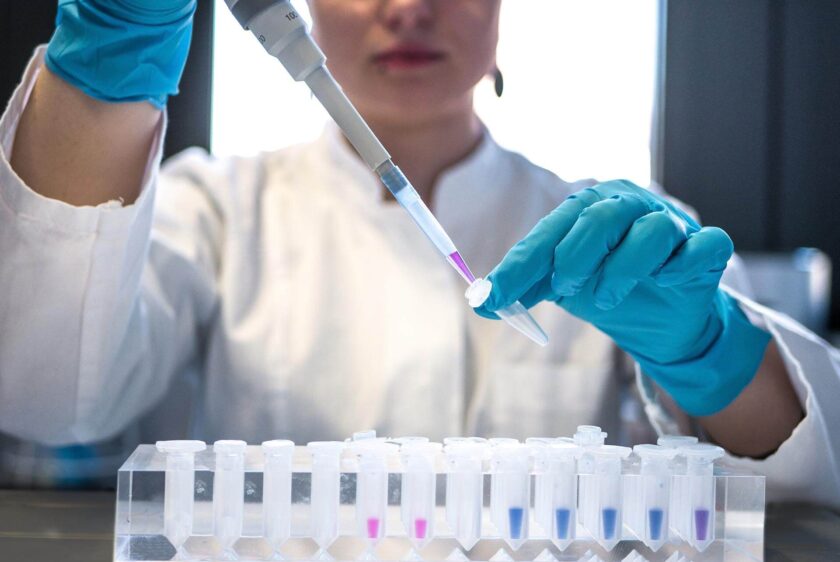
Antibodies are the core functional raw material of all immunoassay-based in vitro diagnostics. Regardless of POCT rapid testing, ELISA enzyme immunoassay, CLIA chemiluminescence, or lateral flow assay performance, detection sensitivity, specificity, background signal stability and batch consistency all fundamentally depend on antibody affinity, epitope matching degree and biochemical stability.
For IVD startups and diagnostic enterprises, many assay prototype failures, high false positive rates, low detection sensitivity and poor batch reproducibility are not caused by formula or process design defects, but by the selection of low-affinity, poorly screened, non-platform-adapted antibody raw materials.
High-affinity antibody development is not simple antigen immunization and conventional monoclonal screening; it is a systematic engineering covering antigen design, immune maturation, high-throughput screening, affinity identification, epitope pairing, platform adaptation verification and ISO 13485 standardized quality control. As a professional IVD CDMO core service capability, high-affinity antibody development directly determines the technical ceiling and global regulatory market access potential of subsequent IVD products.
This article elaborates the definition, core indicators, mainstream development technical routes, platform-oriented screening logic for POCT/ELISA/CLIA/lateral flow, antibody pair matching strategy, and ISO 13485 quality system specification in the whole development process, with industry authoritative parameters and practical landing experience, conforming to Google EEAT authoritative standard and B2B SEO natural layout.
1. Definition & Core Evaluation Metrics of High-Affinity IVD Antibody
1.1 Definition of High-Affinity Antibody in IVD Scenarios
In diagnostic immunoassay scenarios, high-affinity antibody refers to monoclonal or recombinant antibody with ultra-stable antigen binding ability, low dissociation rate and strong anti-interference ability, which can maintain specific binding activity under complex clinical sample matrix, different temperature and buffer system environments.
It is not only reflected in pure in vitro affinity data, but also needs to adapt to the reaction logic of different IVD platforms, reduce non-specific binding, and control background noise at a low level.
1.2 Core Quantitative Indicators (Industry Authoritative Standard)
- Equilibrium Dissociation Constant (Kd)High-affinity antibody for mainstream IVD platforms requires Kd ≤ 10⁻⁹ M; ultra-high affinity for high-sensitivity CLIA and early screening POCT reaches Kd ≤ 10⁻¹⁰ M . The smaller the Kd value, the tighter the antibody-antigen binding, the lower the dissociation probability, and the more stable the detection signal.
- Specificity & Cross-ReactivityNo obvious cross-reaction with homologous analogs, endogenous interfering substances and common clinical biomarkers; avoid false positive and false negative judgment of IVD kits.
- Signal-to-Background Ratio (S/B)Adapt to platform background requirements: lateral flow low background, ELISA stable color development, CLIA ultra-low luminous background.
- Thermal Stability & Buffer AdaptabilityMaintain activity stability in long-term storage, freeze-thaw cycles and different pH buffer environments, laying the foundation for subsequent reagent shelf life.
- Batch ConsistencyAfter antibody preparation and purification, the activity difference between batches is controlled within the process allowable range, meeting ISO 13485 manufacturing quality control requirements.
2. Mainstream Technical Routes for High-Affinity Antibody Development
2.1 Traditional Hybridoma Fusion Technology
Mice, rabbits and other model animals are immunized with optimized antigen; after immune maturation, spleen cells are fused with myeloma cells to establish hybridoma cell lines, and positive clones are screened by limiting dilution.
Advantages: Mature technology, low cost, suitable for conventional infectious disease and tumor marker antibody development;
Limitations: Long cycle, limited affinity upper limit, difficult to screen ultra-high affinity clones, poor performance for difficult antigens.
2.2 Recombinant Rabbit Monoclonal Antibody Technology
Based on plasma cell discovery and single B cell screening, combined with recombinant expression technology, it can quickly screen high-affinity and high-specificity clones, with natural affinity maturation advantage, better epitope diversity than mouse monoclonal antibody . It is the preferred route for high-end CLIA and high-sensitivity POCT projects.
2.3 Phage Display & Ribosome Display Library Screening
Construct natural immune library or synthetic antibody library, obtain specific binding antibody fragments through multiple rounds of biopanning, and realize high-throughput screening of billion-level antibody variants . It is suitable for difficult antigens, low immunogenicity targets and fully humanized antibody development, greatly improving the probability of screening high-affinity clones.
2.4 Affinity Maturation Optimization
On the basis of initial positive clones, through somatic hypermutation, site-directed mutation and sequence optimization, further reduce Kd value, improve binding activity and matrix anti-interference ability, and tailor-make antibodies for high-sensitivity IVD platforms .
3. Platform-Oriented High-Affinity Antibody Screening & Adaptation Logic
The same antibody performs completely differently on ELISA, CLIA, POCT and lateral flow platforms. Professional IVD CDMO must carry out targeted screening and performance verification according to platform characteristics, not rely solely on in vitro affinity data.
3.1 Lateral Flow & POCT Platforms
Core demand: Fast binding speed, low non-specific adsorption, suitable for membrane reaction system, tolerance to complex whole blood/serum samples.
- Prioritize screening antibodies with fast association rate and low background adsorption on nitrocellulose membrane;
- Strictly verify colloidal gold, fluorescent microsphere labeling compatibility, avoid labeling-induced activity loss;
- Control epitope spatial adaptability, prevent steric hindrance affecting sandwich binding;
- Key indicators: Sensitivity ≥95%, specificity ≥98%, stable strip background, no false positive hook effect.
3.2 ELISA Platform
Core demand: Stable plate coating performance, uniform color development, good linearity, controllable intra-assay and inter-assay CV.
- Screen antibodies with strong microplate adsorption and stable coating orientation ;
- Match capture/detection antibody pairs with non-competitive epitopes;
- Strictly verify buffer adaptability and incubation temperature tolerance;
- Quality control standard: Intra-assay CV <5%, inter-assay CV <8%, linear R² >0.99.
3.3 CLIA Chemiluminescence Platform
Core demand: Ultra-high affinity, ultra-low background, wide linear range, suitable for luminous system quantitative detection.
- Prefer ultra-high affinity clones with Kd ≤10⁻¹⁰ M;
- Verify antibody conjugation stability with luminescent markers and magnetic beads;
- Optimize pairing strategy to reduce background luminous value and improve low-value sample detection sensitivity;
- Suitable for early disease screening, low-abundance biomarker quantitative detection scenarios.
4. Antibody Pair Development & Epitope Matching Key Rules
Most clinical IVD kits adopt sandwich immunoassay format, which requires reasonable matching of capture antibody and detection antibody. High affinity alone is not enough; epitope non-overlapping and binding synergy must be guaranteed .
- Epitope Classification ScreeningDistinguish linear epitope and conformational epitope, avoid two antibodies competing for the same binding site leading to signal attenuation;
- Pair Combination VerificationCarry out cross-matching of multiple candidate clones, screen optimal combination with high S/B ratio, strong anti-interference and wide linear range;
- Matrix Adaptation TestVerify paired performance in serum, plasma, whole blood and other actual clinical samples, eliminate clones susceptible to endogenous interference;
- Reserve Alternative PairsReserve 2–3 sets of backup antibody pairs for subsequent process optimization, batch production stability maintenance and regulatory file reserve.
5. ISO 13485 QMS Full-Process Standardization for Antibody Development & Production
High-affinity antibody for commercial IVD is not only laboratory R&D achievement, but also needs to meet ISO 13485 medical device quality management system specifications, supporting FDA 510(k) and EU IVDR technical document compilation and audit.
5.1 Design & Development Control
Follow ISO 13485 design control requirements, record antigen design, immunization scheme, clone screening, performance verification and other full-process data, form complete Design History File (DHF).
5.2 Raw Material & Intermediate QC
Implement strict IQC for antigen, adjuvant, cell strain and other raw materials; record all process parameters in cell culture, antibody expression, purification, fragmentation and modification links, with full traceability.
5.3 Purification & Modification Standardization
Unify affinity purification, ion exchange polishing, concentration buffer replacement, labeling modification SOP; control purity, endotoxin, aggregate rate and other indicators to meet IVD reagent raw material grade standards.
5.4 Batch Release & Stability Validation
Each batch of finished antibody undergoes affinity re-verification, specificity detection, stability investigation and platform pilot assay verification; form complete batch release report and stability data, supporting long-term commercial manufacturing and regulatory post-market surveillance.
6. Why IVD Startups Outsource High-Affinity Antibody Development to Professional CDMO
- Reduce R&D Cycle & Trial-and-Error CostProfessional IVD CDMO has mature antibody library, high-throughput screening platform and platform adaptation verification system, avoiding repeated failure of independent screening by startups.
- Platform Customized Matching CapabilityA single team masters simultaneous development and adaptation of POCT/ELISA/CLIA/lateral flow multi-platform antibodies, matching different product pipeline layouts.
- Complete Regulatory Compliance DataThe whole process is implemented under ISO 13485 system, with standardized experimental records, performance data and quality documents, which can be directly used for FDA and IVDR registration declaration.
- Docking with Subsequent GMP Manufacturing SeamlesslyAfter antibody development and validation, it can be directly transferred to CDMO internal GMP production line for reagent preparation and kit assembly, realizing closed-loop from antibody R&D to commercial manufacturing.
Conclusion
High-affinity antibody is the underlying technical cornerstone of POCT, ELISA, CLIA and lateral flow IVD platforms. Its development is not only conventional immunization and screening, but needs to rely on mature technical routes, platform-oriented verification logic, scientific antibody pairing strategy and ISO 13485 standardized quality control system.
For diagnostic startups and enterprises, choosing a professional IVD CDMO with high-affinity antibody independent development capability can lock in core raw material advantages at the early stage of the project, avoid technical bottlenecks caused by antibody performance defects, shorten the product iteration cycle, and lay a solid foundation for global market access and long-term batch quality stability of IVD products.
Author Profile

- Written by the IVDCDMO technical and regulatory team, with expertise in diagnostic assay development, GMP manufacturing, ISO 13485 systems, and global IVD commercialization for biotech innovators worldwide.
Latest entries
 IVD ManufacturingNovember 2, 2026OEM IVD Manufacturing & Private Label Diagnostics: A Practical Guide from Product Concept to Market Launch
- IVD ManufacturingOctober 29, 2026IVD Manufacturing Company: A Complete Guide to Choosing the Right Diagnostic Manufacturing Partner
- IVD ManufacturingOctober 26, 2026IVD Raw Materials Manufacturing: A Practical Guide to Quality, Scale-Up and Supplier Selection
- IVD ManufacturingOctober 19, 2026In Vitro Diagnostic Contract Manufacturing Buyer Guide