The Extraordinary Journey of Gene Sequencing Technology
In 2001, when the first draft of the human genome was unveiled, it marked one of the most significant scientific achievements in modern history. The international Human Genome Project spanned more than a decade, mobilized thousands of researchers worldwide, and posted an overall total investment exceeding $2.7 billion. Early commercial whole-human-genome sequencing based on first-generation Sanger chemistry carried a sticker price of roughly $100 million per genome, while the original public consortium’s per-genome sequencing cost topped billions of US dollars at project launch.
Today, sequencing a complete human genome can cost approximately $1,000 or less for bulk clinical batches, with small-panel targeted genetic sequencing often priced at only a few hundred US dollars. What was once humanity’s most ambitious large-scale biological research project has evolved into an affordable mainstream tool across clinical medicine, biotechnology, crop science and direct-to-consumer health testing.
The steep downward trajectory of sequencing expenses is frequently compared to computing’s Moore’s Law, yet cost declines for genomics have drastically outpaced it. Few industrial technologies throughout history have delivered simultaneous exponential leaps in throughput, accuracy and reliability alongside such precipitous price erosion. This transformative cost collapse has restructured modern life sciences and laid the core groundwork for the global precision medicine era.
What Is Gene Sequencing?
Gene sequencing refers to the laboratory process of decoding the exact linear order of four core DNA nucleotides: adenine (A), thymine (T), cytosine (C), and guanine (G).
DNA stores the fundamental biological blueprint that dictates cellular development, bodily function, inherited physical traits and inherent disease susceptibility. Reading these nucleotide sequences unlocks granular insights into how all living organisms develop and malfunction at the molecular level.
Modern sequencing platforms empower scientists and clinicians to:
- Pinpoint pathogenic genetic mutations
- Diagnose and investigate inherited hereditary illnesses
- Map mutational evolution during cancer progression
- Trace pathogen transmission for infectious disease surveillance
- Design personalized targeted pharmaceutical therapies
- Accelerate selective breeding for improved crop and livestock strains
- Uncover evolutionary relationships and global biodiversity patterns
Simply put, gene sequencing functions as a biological information technology that reads the inherent code of all life forms.
The History of Gene Sequencing: Four Decades of Innovation
The First Generation: Sanger Sequencing (1977)
Contemporary DNA sequencing originated in 1977 when British biochemist Frederick Sanger invented the chain-termination sequencing method.
Core characteristics of classic Sanger sequencing:
- Outstanding raw sequencing accuracy
- Consistent, trustworthy single-read data quality
- Very limited testing throughput
- High reagent and labor-driven operational expenses
For nearly 30 years, Sanger remained the global gold-standard sequencing methodology and served as the primary workhorse technology powering the original Human Genome Project. Nevertheless, full human genome sequencing via Sanger required massive capital investment, dedicated specialized lab infrastructure and years of concentrated lab work, locking the technology out of routine clinical use for decades.
The Human Genome Project (1990–2003)
Launched officially in 1990 and fully completed in 2003, the Human Genome Project permanently revolutionized foundational biological research.
Key project milestones:
- Decoded roughly 3 billion human DNA base pairs across the full human reference genome
- Built cross-border collaborative research networks spanning dozens of countries
- Established open-access foundational public genomic reference databases
While the project conclusively proved large-scale whole-genome sequencing was scientifically feasible, its prohibitive per-sample costs highlighted an urgent industry bottleneck: genome sequencing was economically unviable for routine patient care at that time.
The Rise of Next-Generation Sequencing (NGS)
A landmark genomic industrial revolution took hold in the mid-2000s with the commercial rollout of Next-Generation Sequencing (NGS).
Unlike Sanger’s approach that processes individual DNA fragments one by one, NGS enables massively parallel sequencing of millions of fragmented DNA molecules simultaneously on a single run. This parallelized architecture exploded total testing throughput while driving sustained, rapid cost compression.
Revised verified industry cost milestones aligned with official NHGRI historical data:
- 2005: First mainstream commercial NGS sequencing instruments officially launch onto market
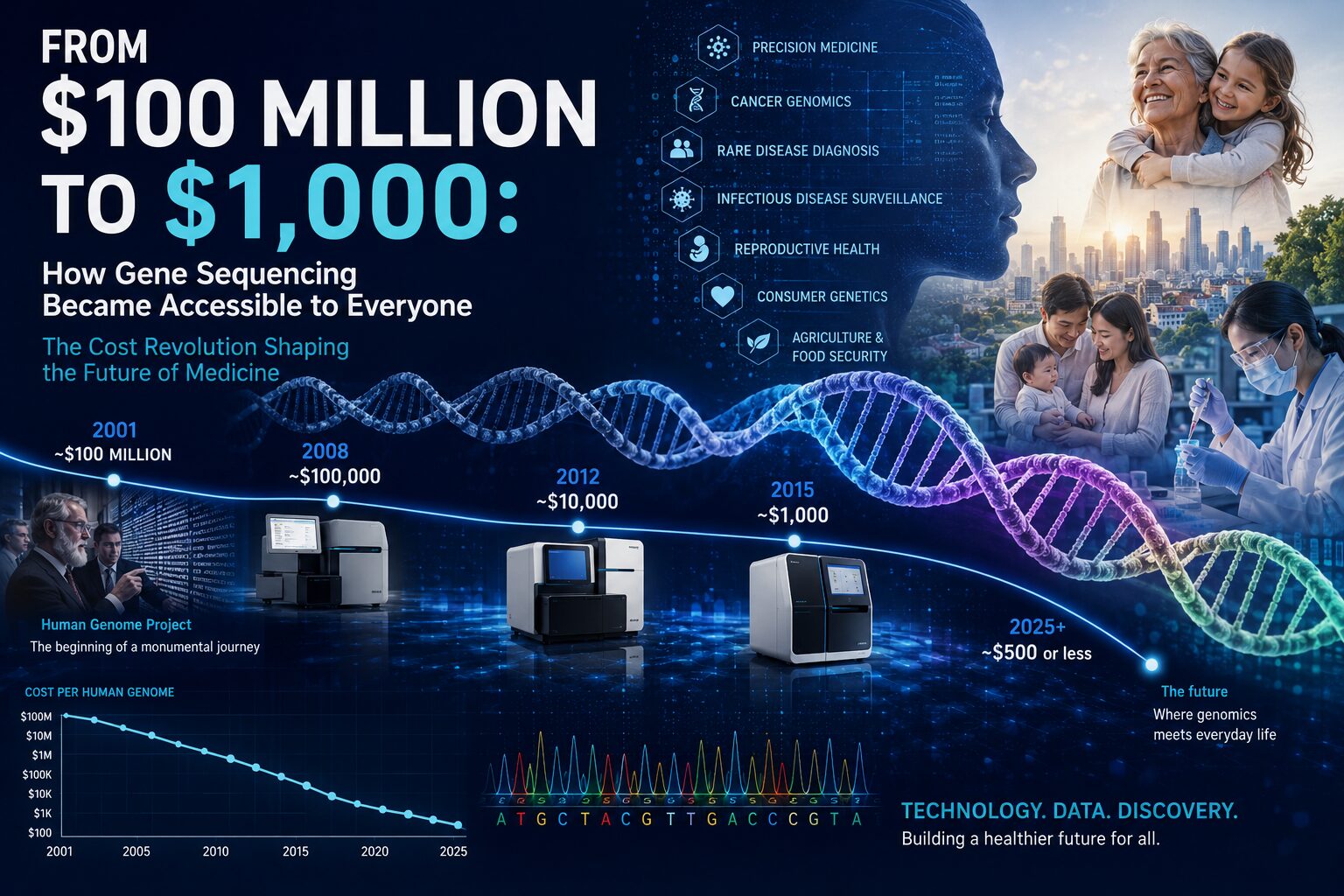
- 2008: Full human whole-genome sequencing drops to around $100,000 per sample
- 2012: Standard whole-genome pricing falls below $10,000 USD
- 2015: The long-sought $1,000 per human whole-genome milestone is commercially achieved
- Late 2010s onward: Global clinical adoption of routine NGS testing expands at accelerated speed across continents
Year after year, genomic sequencing’s cost reduction curve consistently outperformed Moore’s Law, cementing it as one of biotechnology’s most disruptive technological success stories.
Third-Generation Long-Read Sequencing
Currently, third-generation long-read sequencing platforms further expand the boundaries of modern genomic analysis, with two dominant industry developers leading commercialization:
- Pacific Biosciences (PacBio, SMRT single-molecule fluorescence sequencing)
- Oxford Nanopore Technologies (nanopore electrical current sensing sequencing)
These two distinct long-read technologies produce drastically longer continuous DNA sequences compared to short-read NGS, delivering unique advantages for:
- Identification of large-scale structural genetic variants undetectable by short-read NGS
- High-quality de novo full-genome assembly of complex species genomes
- Clinical research into hard-to-diagnose rare genetic diseases
- Direct epigenetic modification detection without extra lab processing
- Decoding highly repetitive, complex genomic regions
Long-read sequencing continues to drop in price and is projected to gain broader clinical adoption as manufacturing and reagent costs keep declining.
The Cost Revolution: From $100 Million to $1,000
No single advancement in genomics carries greater real-world impact than the unprecedented multi-decade collapse in per-genome sequencing pricing.
Approximate Whole Human Genome Sequencing Cost (Official NHGRI Standard Benchmark)
| Year | Estimated Per-Genome Cost |
|---|---|
| 2001 | ~$100 million (early commercial Sanger pricing) |
| 2008 | ~$100,000 |
| 2012 | ~$10,000 |
| 2015 | ~$1,000–$5,000 |
| 2025 | ~$200–$1,000 (bulk institutional/clinical pricing; retail consumer WGS hovers near $1,000) |
Five core interrelated factors jointly fueled this historic cost decline:
1. Skyrocketing Sequencing Throughput
Modern high-capacity sequencers generate terabase-scale raw genetic data within a single instrument run, drastically amortizing fixed equipment expenses across thousands of individual samples and slashing unit cost.
2. End-to-End Laboratory Automation
Robotic liquid-handling systems and fully standardized automated lab workflows cut manual human labor requirements while boosting experimental consistency across batches.
3. Optimized Sequencing Chemistry
Continuous refinement of sequencing enzyme and fluorescent reagent formulations improves signal-to-noise performance while lowering raw material consumption per test.
4. Scalable Cloud Computational Infrastructure
Massive raw genomic datasets now undergo fast, cost-effective bioinformatic analysis via cloud computing, eliminating prohibitive in-house supercomputer construction costs for labs and hospitals.
5. Intensified Market Competition & Large-Scale Production Scaling
Leading global sequencing suppliers including Illumina, BGI Genomics, Pacific Biosciences, and Oxford Nanopore Technologies drive iterative hardware and chemistry upgrades through fierce market competition; mass manufacturing further pulls down per-unit production expenses.
China’s Rise in Gene Sequencing
Over the past two decades, China has evolved into one of the world’s top-tier genomic powerhouses with world-leading sequencing production capacity.
Industry flagship organization BGI Genomics anchors China’s global genomic footprint across multiple core verticals:
- Large-scale population cohort genomic research
- Routine clinical diagnostic genome and exome sequencing
- Precision oncology sequencing and translational cancer research
- Genomic-assisted crop and livestock agricultural breeding
- National-level pathogen genomic infectious disease surveillance
China’s integrated advantages—advanced domestic precision equipment manufacturing, sustained government and private R&D investment, plus massive domestic clinical sample volume—have catalyzed rapid sequencing penetration throughout Asia and strengthened global genomic data output worldwide.
Real-World Applications of Gene Sequencing
Precision Oncology
Cancer treatment represents sequencing’s most widely adopted high-impact clinical application globally.
Tumor-normal paired genomic sequencing enables pathologists and oncologists to identify:
- Key cancer-driving somatic gene mutations
- Validated molecular targets for targeted anti-cancer medications
- Genetic markers predicting early or acquired drug resistance
- Prognostic biomarkers guiding patient long-term disease outlook
This molecular data empowers personalized cancer therapy selection instead of one-size-fits-all empirical chemotherapy regimens.
Rare Disease Diagnosis
Hundreds of millions globally live with undiagnosed rare monogenic or complex genetic illnesses.
Whole-exome sequencing (WES) and whole-genome sequencing (WGS) efficiently pinpoint causative pathogenic gene variants that routinely evade conventional clinical testing, delivering definitive diagnoses for families after years of inconclusive medical evaluations.
Infectious Disease Surveillance
The global COVID-19 pandemic vividly showcased genomic epidemiology’s indispensable public health value.
Pathogen sequencing enabled global research consortia to:
- Rapidly identify emerging SARS-CoV-2 mutant variants
- Continuously monitor real-time viral evolutionary drift
- Map domestic and cross-border infection transmission chains
- Feed critical molecular data into vaccine design and iteration programs
Genomic pathogen surveillance has since become a permanent core component of modern global public health defense infrastructure.
Reproductive Health
Sequencing technology underpins multiple mainstream reproductive medicine workflows:
- Non-invasive prenatal testing (NIPT) for common fetal chromosomal aneuploidy screening
- Pre-conception carrier screening for recessive inherited disease alleles
- Preimplantation genetic testing for in-vitro fertilization (IVF) embryos
- Postnatal newborn inherited metabolic and genetic disorder assessment
These genomic screening tools are progressively integrated into standard obstetric and reproductive clinical pathways across developed and emerging healthcare markets.
Agriculture and Global Food Security
Agricultural genomics via DNA sequencing directly addresses pressing global food challenges by:
- Boosting staple crop maximum achievable yield
- Engineering crop genetic resistance against destructive pathogens and pests
- Breeding drought- and climate-resilient staple plant varieties
- Accelerating genetic improvement of commercial livestock breeds
With the ongoing expansion of global human population, genomic-guided breeding will grow increasingly vital for sustainable, stable worldwide food supply chains.
What Does Gene Sequencing Mean for Ordinary People?
For decades, DNA sequencing remained confined exclusively to academic research labs and specialized tertiary medical centers, far removed from everyday people’s lives. This paradigm has fundamentally shifted.
Now average consumers and patients interact with sequencing-derived testing through multiple common channels:
- Clinical cancer tumor genomic diagnostics
- Standard prenatal fetal genetic screening
- Undiagnosed rare disease whole-genome workups
- Pharmacogenomic testing to tailor prescription medication dosage and selection
- Direct-to-consumer genetic services (note: most affordable consumer ancestry tests rely on fixed SNP genotyping chips rather than full whole-genome sequencing)
- Personalized preventive wellness and disease-risk assessment
Looking forward, full genomic profiles are poised to become a standard embedded component of individual electronic health records worldwide. Physicians will leverage personal genomic data to:
- Calculate individualized lifetime inherited disease susceptibility risks
- Prescribe optimal, side-effect-minimized drug regimens per patient genetics
- Customize age- and risk-specific disease screening schedules
- Improve long-term chronic disease treatment efficacy
This shift from reactive symptom-focused care toward proactive predictive medicine stands as affordable genome sequencing’s most transformative long-term public health legacy.
Challenges That Still Remain
Despite spectacular technical and cost progress across the sequencing industry, four core obstacles continue limiting universal global genomic medicine adoption:
Data Interpretation Bottlenecks
Generating raw genome sequence data has become relatively affordable and streamlined; interpreting the clinical meaning of millions of detected genetic variants remains the primary industry bottleneck, with most identified gene variants still classified as variants of uncertain significance (VUS) lacking validated clinical correlation data.
Genetic Privacy & Regulatory Ethics Concerns
Human genomic data carries uniquely sensitive, immutable personal biological information. Safeguarding genetic data privacy and preventing discriminatory misuse by insurers or employers stays a top global legislative and ethical priority.
Fragmented Healthcare System Integration
Most national healthcare systems lack standardized lab billing frameworks, clinician genomic training and centralized bioinformatic analysis infrastructure required to fully embed routine genome testing into mainstream primary care.
Unequal Global Access Equity
While sequencing prices have plummeted at industrial scale, stark regional wealth gaps create uneven access to affordable genomic diagnostics between high-income nations and low- and middle-income countries worldwide.
The Future: Toward the $100 Genome
Global sequencing developers and research institutions collectively pursue the next landmark industry milestone: commercially viable $100 per full human whole-genome sequencing. Multiple emerging technological breakthroughs are projected to bring this target into mainstream reality:
- Next-generation refined nanopore sequencing chemistry and miniaturized hardware
- AI-powered automated base calling and variant annotation cutting manual analysis costs
- Advanced semiconductor-based solid-state sequencing chip architecture
- All-in-one integrated sample-to-sequence fully enclosed automated platforms
- End-to-end streamlined pre-sequencing sample preparation workflows with minimal human intervention
Upon hitting the $100 genome threshold, full human genome sequencing is expected to achieve comparable clinical ubiquity to routine blood panel testing today.
The multi-decade evolution from a $100-million pioneering human genome to today’s $1,000 affordable full-genome sequencing stands among modern science’s most remarkable technological success stories.
What originated as a landmark cross-border mega-science research initiative has matured into a versatile industrial tool reshaping global clinical medicine, biotechnology, agricultural development and public health defense. Iterative leaps across Sanger, short-read NGS and long-read third-generation sequencing plus continuous bioinformatic refinement have collapsed historic sequencing pricing while vastly expanding clinical utility and worldwide accessibility.
As genome testing expenses keep falling and computational variant interpretation technology matures, personal genomic profiling will steadily embed into routine everyday healthcare globally. Modern medicine’s ongoing transition toward predictive, preventive, personalized, data-driven care is directly enabled by affordable, scalable human genome sequencing. The once-fantastical scientific dream of reading humanity’s complete genetic life code has evolved into accessible real-world reality for millions across the globe.
Author Profile

- Written by the IVDCDMO technical and regulatory team, with expertise in diagnostic assay development, GMP manufacturing, ISO 13485 systems, and global IVD commercialization for biotech innovators worldwide.
Latest entries
 Assay DevelopmentSeptember 23, 2026CDMO Custom Development of Test Kits: From Assay Concept to Scalable IVD Manufacturing
- IVD ManufacturingJuly 24, 2026Manufacturing for IVD Products: From Assay Transfer to Reliable Commercial Supply
- IVD ManufacturingJuly 13, 2026IVD Contract Manufacturing Cost: NRE, Tooling, Validation, MOQ and Unit Economics
- KnowledgeJuly 6, 2026IVD CDMO vs CRO vs CMO: Which Partner Do You Need at Each Development Stage?