Understanding IVD in the Pharmaceutical and Healthcare Context
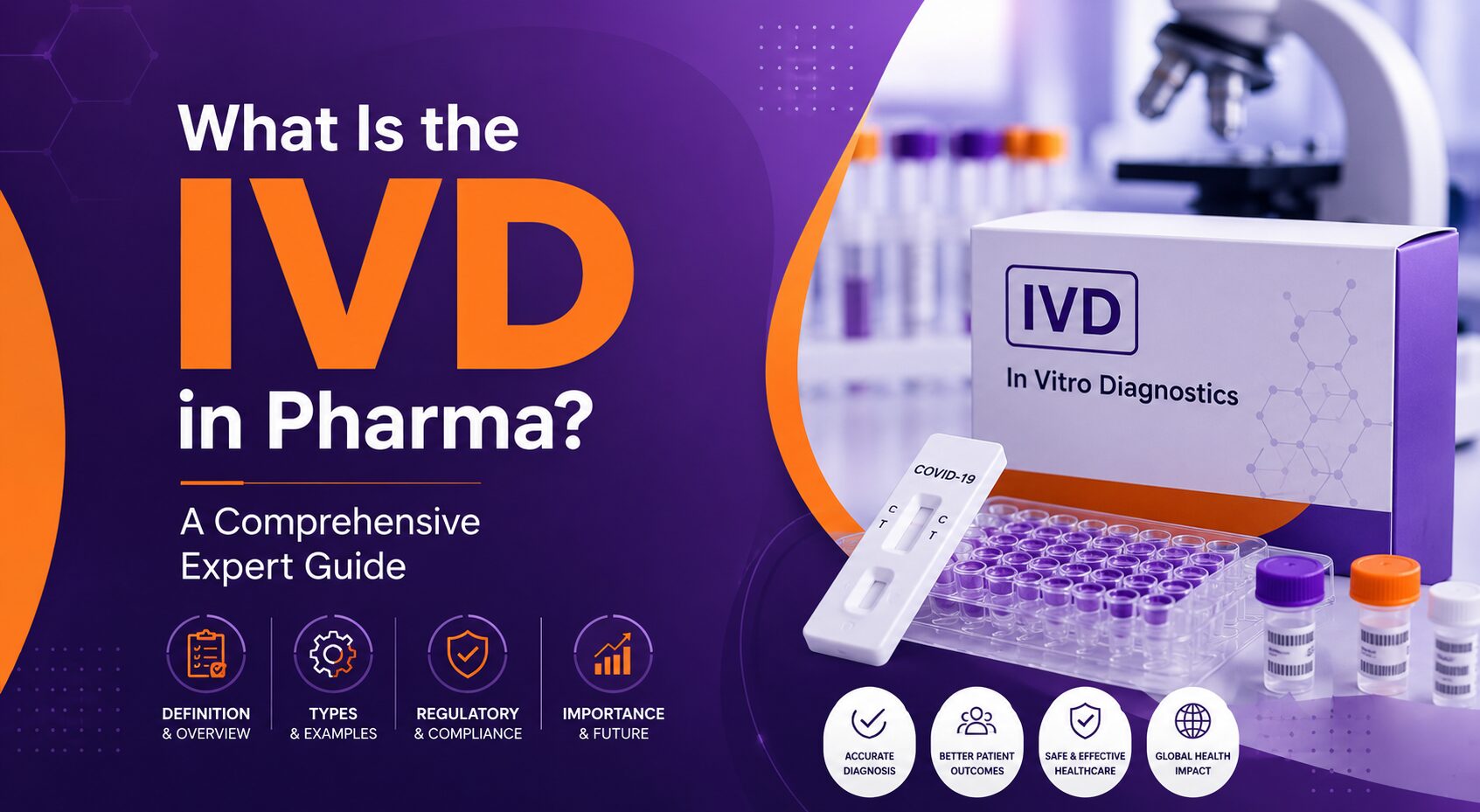
In the pharmaceutical and healthcare industries, IVD stands for In Vitro Diagnostics. The term “in vitro” literally translates to “in glass,” referring to analytical tests performed outside a living human or animal organism.
Unlike therapeutic drugs that directly intervene in bodily biological systems to cure, relieve or prevent disease, IVD products analyze patient biospecimens—including whole blood, plasma, serum, urine, saliva, cerebrospinal fluid and tissue extracts—to generate objective, actionable clinical data for medical decision-making.
IVD forms the foundational backbone of modern precision medicine, supporting four core healthcare workflows: disease screening & diagnosis, real-time treatment monitoring, patient subgroup stratification, and population preventive care. From everyday at-home blood glucose strips to high-complexity next-generation sequencing (NGS) tumor panels, IVD tools empower clinicians and pharmaceutical R&D teams to eliminate guesswork, streamline clinical trials and deliver personalized therapies.
Market data from Frost & Sullivan shows the pharma-associated IVD market surpassed $35 billion globally in 2026, with companion diagnostic segments recording a compound annual growth rate (CAGR) of 12.4% as targeted oncology and rare disease drugs dominate new drug pipelines.
The Core Role of IVD Across the Entire Pharmaceutical Value Chain
For drug developers, biotech firms and pharmaceutical manufacturers, IVD is no longer an auxiliary lab tool—it is an inseparable component of drug discovery, clinical development, post-launch monitoring and internal quality control. Its key applications fall into four core verticals:
1. Drug Discovery & Clinical Trial Biomarker Testing
IVD validated assays are the gold standard for quantifying predictive, prognostic and safety biomarkers across preclinical research and Phase I–III clinical trials.
- Stratify eligible patient cohorts to reduce trial failure rates and cut research costs;
- Measure target engagement to validate whether candidate molecules interact with intended biological pathways;
- Quantify toxicity markers to track adverse drug reactions in human subjects;
- Enable precision dosing by correlating biomarker levels with optimal therapeutic exposure.
2. Companion Diagnostics (CDx) – The Highest-Growth Pharma IVD Segment
Companion diagnostics are regulatory-classified IVD tests designed to pair with specific prescription medicines, especially targeted cancer therapies. They are split into three functional categories:
- Predictive CDx: Screen patients upfront to confirm treatment eligibility.
Example: EGFR mutation IVD assays identify lung cancer patients qualified for osimertinib targeted therapy, avoiding ineffective treatment for biomarker-negative populations. - Monitoring CDx: Track tumor or biomarker shifts mid-treatment to assess therapeutic response.
- Safety CDx: Detect genetic variants linked to severe adverse drug reactions before administration.
Without approved companion diagnostics, most modern targeted drugs cannot obtain full market authorization from the FDA, EMA or NMPA.
3. Pharmacovigilance & Long-Term Patient Treatment Surveillance
Post-launch, pharmaceutical brands deploy IVD testing protocols to fulfill mandatory pharmacovigilance obligations:
- Continuously monitor hematological, hepatic and renal biochemical markers in long-term medication users;
- Capture real-world clinical data to update drug labeling and adjust dosage guidance for vulnerable populations;
- Flag rare delayed adverse events triggered by chronic drug intake.
4. Internal QC & Quality Assurance for Biologics, Vaccines & Raw Materials
Pharma factories rely on calibrated IVD systems for in-house batch compliance testing:
- Detect microbial contamination in bioprocessing cell cultures and finished vaccine batches;
- Verify protein concentration, antibody purity and reagent stability during biomanufacturing;
- Conduct release testing to meet ISO 13485, FDA QSR and local national medical device standards before commercial shipment.
Main Types of IVD Products Widely Adopted in Pharmaceutical R&D
Different drug development goals require distinct IVD technology platforms; the four most common categories used by pharma teams are listed below:
- Immunodiagnostics: Utilize antigen-antibody binding reactions to quantify target proteins. Core technologies include ELISA, CLIA, chemiluminescence and lateral flow rapid assays. Widely used for vaccine antibody titer testing and protein biomarker quantification.
- Molecular Diagnostics: Analyze DNA, RNA and gene variants via PCR, qPCR, RT-PCR and NGS multi-omics panels. Indispensable for infectious disease trial screening, pharmacogenomics and tumor companion diagnostic development.
- Clinical Chemistry Assays: Measure circulating metabolites, enzymes, electrolytes and lipids in serum/urine samples. Standard for routine safety biomarker monitoring in all clinical trial phases.
- Hematology Testing Panels: Analyze blood cell counts, cell morphology and coagulation function. Critical for hematological drug development, chemotherapy toxicity monitoring and transfusion-related trial research.
IVD Manufacturing & Strategic Value of Specialized IVD CDMOs
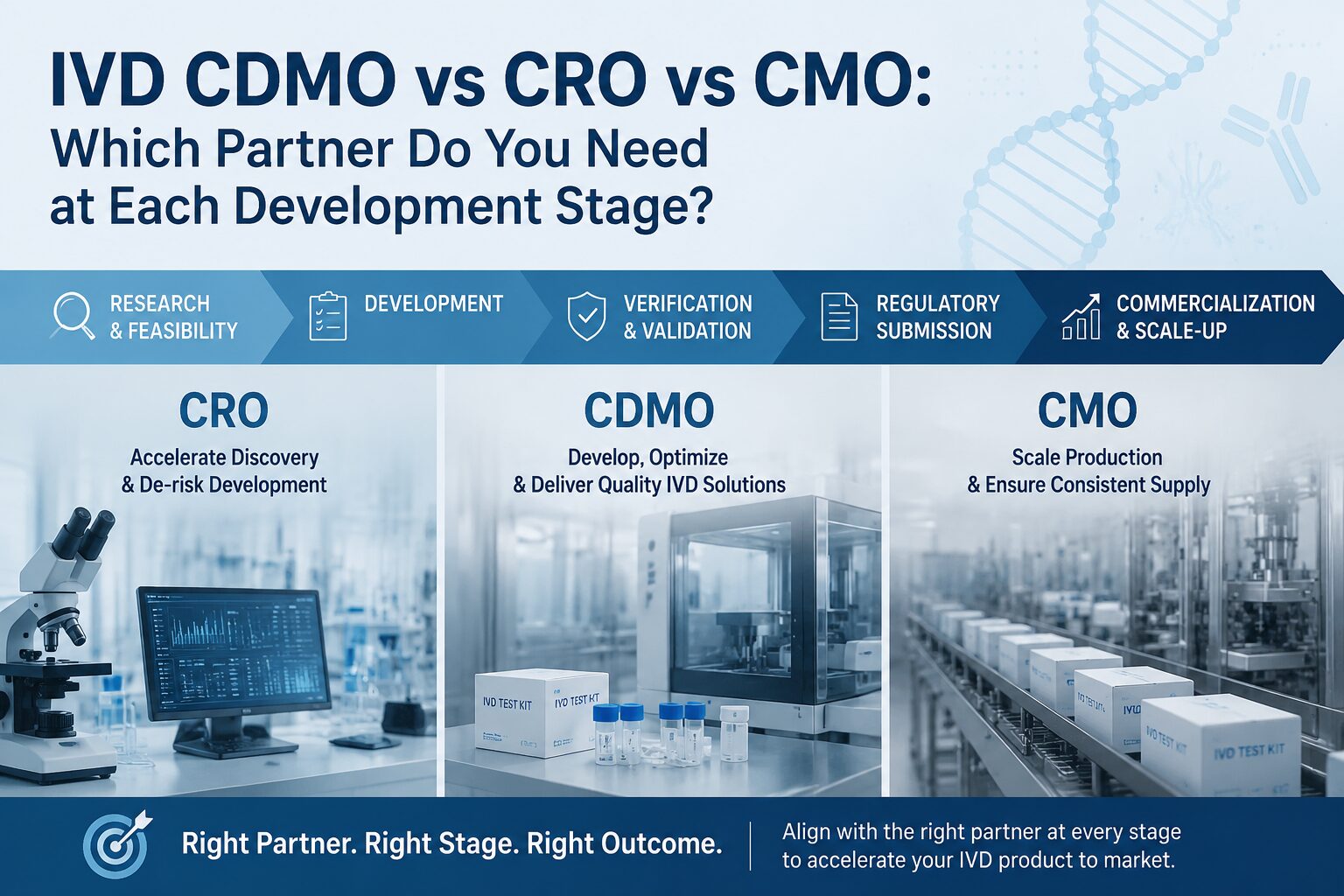
End-to-end IVD development and production is highly technical, requiring cross-disciplinary expertise in molecular biology, analytical validation and cross-border regulatory registration. Full-scale manufacturing follows five standardized, audit-ready stages:
- Assay Design & Biomarker Validation: Select target biomarkers, optimize detection probes and establish performance thresholds aligned with clinical trial endpoints.
- Custom Reagent Formulation: Stabilize antibodies, enzymes, buffers and calibrators to guarantee consistent shelf life and reproducible test results across production batches.
- Analytical & Clinical Validation: Complete rigorous testing to document diagnostic sensitivity, specificity, precision and limit of detection (LOD) per global regulatory standards.
- Global Regulatory Dossier Submission: Compile technical files for certification bodies including FDA, EMA (EU IVDR) and NMPA, covering design history files, clinical performance reports and quality management records.
- Scaled Commercial Manufacturing: Maintain full traceability and batch control under ISO 13485-certified cleanroom conditions for mass reagent or kit production.
Why Pharma Partners with IVD CDMOs
Building an in-house IVD development facility demands heavy capital expenditure, dedicated regulatory teams and years of clinical validation experience—barriers many mid-size biotech and pharma firms cannot overcome alone.
Contract Development and Manufacturing Organizations (IVD CDMOs) deliver clear business advantages:
- Eliminate upfront lab construction and equipment investment costs;
- Cut clinical trial and diagnostic registration timelines by 12–18 months on average;
- Provide cross-jurisdictional regulatory expertise to simultaneously comply with EU IVDR, FDA QSR and Chinese NMPA rules;
- Offer flexible batch scaling, from small clinical trial pilot kits to large-volume commercial reagent supply.
Global Regulatory Compliance Requirements for Pharma IVD Products
All IVD kits tied to drug development or clinical patient use are classified as medical devices, subject to strict, risk-tiered regulatory oversight due to their direct impact on clinical decision-making and patient safety. Mandatory compliance deliverables include:
- Complete design control and development history documentation (DHF) covering all assay iterations;
- Full analytical and clinical performance datasets proving consistent, accurate diagnostic outputs;
- Fully implemented ISO 13485-aligned quality management systems across R&D and production;
- Formal post-market surveillance and adverse incident reporting frameworks for commercialized IVD products.
Key Regional Regulatory Differences
- EU IVDR (Regulation 2017/746): Enforces stringent clinical evidence requirements for all high-risk IVD (including companion diagnostics), with mandatory notified body audits before market access.
- FDA (US): Adopts risk-based device classification, requiring premarket approval (PMA) or 510(k) clearance depending on test complexity.
- NMPA (China): Mandates domestic clinical trial verification and batch sampling inspections for imported or locally manufactured IVD reagents.
Uniform regulatory alignment ensures diagnostic test results remain trustworthy, reproducible and legally marketable across multiple global territories for multi-center international drug trials.
Future Trends Shaping Pharma-Focused IVD Development
As precision medicine reshapes global pharmaceutical pipelines, four transformative trends are redefining how drug developers utilize IVD technology:
- Deep Integration Between IVD and Individualized Precision Therapy
Custom companion diagnostic panels will become a mandatory co-development component for all new targeted oncology, autoimmune and rare disease drugs, pairing therapeutic molecules with matching IVD tests from early discovery. - AI-Augmented Diagnostic Data Interpretation
Machine learning algorithms streamline analysis of multi-omics NGS IVD datasets, automating patient stratification in large Phase II/III multi-center trials and reducing manual lab review error rates. - Expansion of Decentralized Point-of-Care (POC) IVD Testing
Portable, rapid POC diagnostic kits enable off-site biospecimen testing for global distributed clinical trials, removing reliance on central lab shipping and accelerating patient enrollment timelines. - Multi-Omics Biomarker IVD Panel Innovation
Combined genomics, proteomics and metabolomics IVD panels unlock novel drug target discovery, supporting next-generation therapeutic development for hard-to-treat diseases including solid tumors and neurodegenerative disorders.
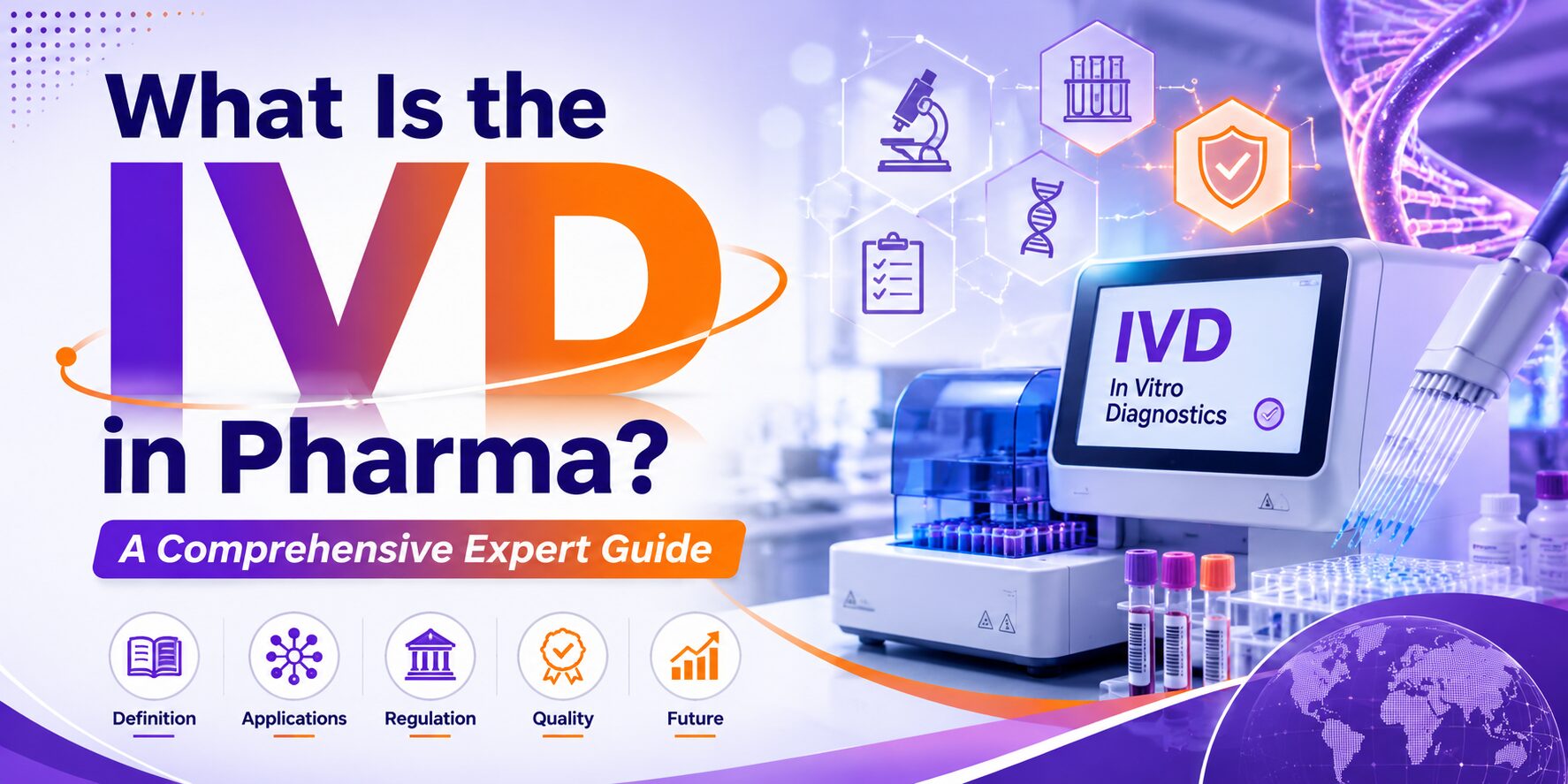
Within the pharmaceutical industry, IVD stands for In Vitro Diagnostics: a category of regulated medical devices and lab assays that extract critical clinical insights from patient biospecimens outside the living body.
IVD acts as a critical enabler across the full pharmaceutical lifecycle: it accelerates drug discovery, validates companion diagnostic eligibility for targeted therapies, ensures post-launch patient safety via pharmacovigilance, and maintains strict internal manufacturing quality control. For biotech researchers, pharmaceutical regulatory specialists and clinical operation teams, a thorough grasp of IVD technology, manufacturing rules and global compliance frameworks is essential to delivering safe, effective personalized medicines to global patients.
Frequently Asked Questions (FAQs)
Q1: What does IVD mean in pharma?
A: IVD is the abbreviation for In Vitro Diagnostics, referring to laboratory tests run on patient biospecimens outside the human body to generate objective data that guides drug research, clinical trial enrollment and patient treatment decisions.
Q2: How is IVD integrated into pharmaceutical drug development workflows?
A: IVD validated biomarker assays quantify drug efficacy and safety signals across preclinical and clinical trials, stratify eligible patient cohorts, and support companion diagnostic co-development required for targeted therapy regulatory approval.
Q3: What are the primary types of IVD platforms used by pharma companies?
A: The four mainstream categories are immunodiagnostics, molecular diagnostics (PCR/NGS), routine clinical chemistry assays, and hematology testing panels, each serving distinct biomarker measurement purposes for drug research.
Q4: Why are IVD medical products heavily regulated worldwide?
A: Diagnostic test results directly shape clinical treatment plans and drug trial data integrity. Regional regulators enforce strict standards to guarantee test accuracy, reproducibility and patient safety, preventing misdiagnosis or invalid clinical trial outcomes.
Q5: What services does an IVD CDMO provide for pharmaceutical partners?
A: An IVD Contract Development and Manufacturing Organization delivers full-lifecycle support: custom assay design, reagent formulation, analytical & clinical validation, global regulatory submission, cleanroom pilot and commercial kit manufacturing, and post-market batch supply.
Q6: What is a companion diagnostic (CDx), and why does it matter for pharma?
A: Companion diagnostics are specialized IVD tests that identify patients suitable for a matching targeted drug. Most modern oncology therapeutics cannot obtain full market authorization without a validated, regulatory-approved CDx paired with the treatment.
Author Profile

- Written by the IVDCDMO technical and regulatory team, with expertise in diagnostic assay development, GMP manufacturing, ISO 13485 systems, and global IVD commercialization for biotech innovators worldwide.
Latest entries
 Assay DevelopmentSeptember 23, 2026CDMO Custom Development of Test Kits: From Assay Concept to Scalable IVD Manufacturing
- IVD ManufacturingJuly 24, 2026Manufacturing for IVD Products: From Assay Transfer to Reliable Commercial Supply
- IVD ManufacturingJuly 13, 2026IVD Contract Manufacturing Cost: NRE, Tooling, Validation, MOQ and Unit Economics
- KnowledgeJuly 6, 2026IVD CDMO vs CRO vs CMO: Which Partner Do You Need at Each Development Stage?