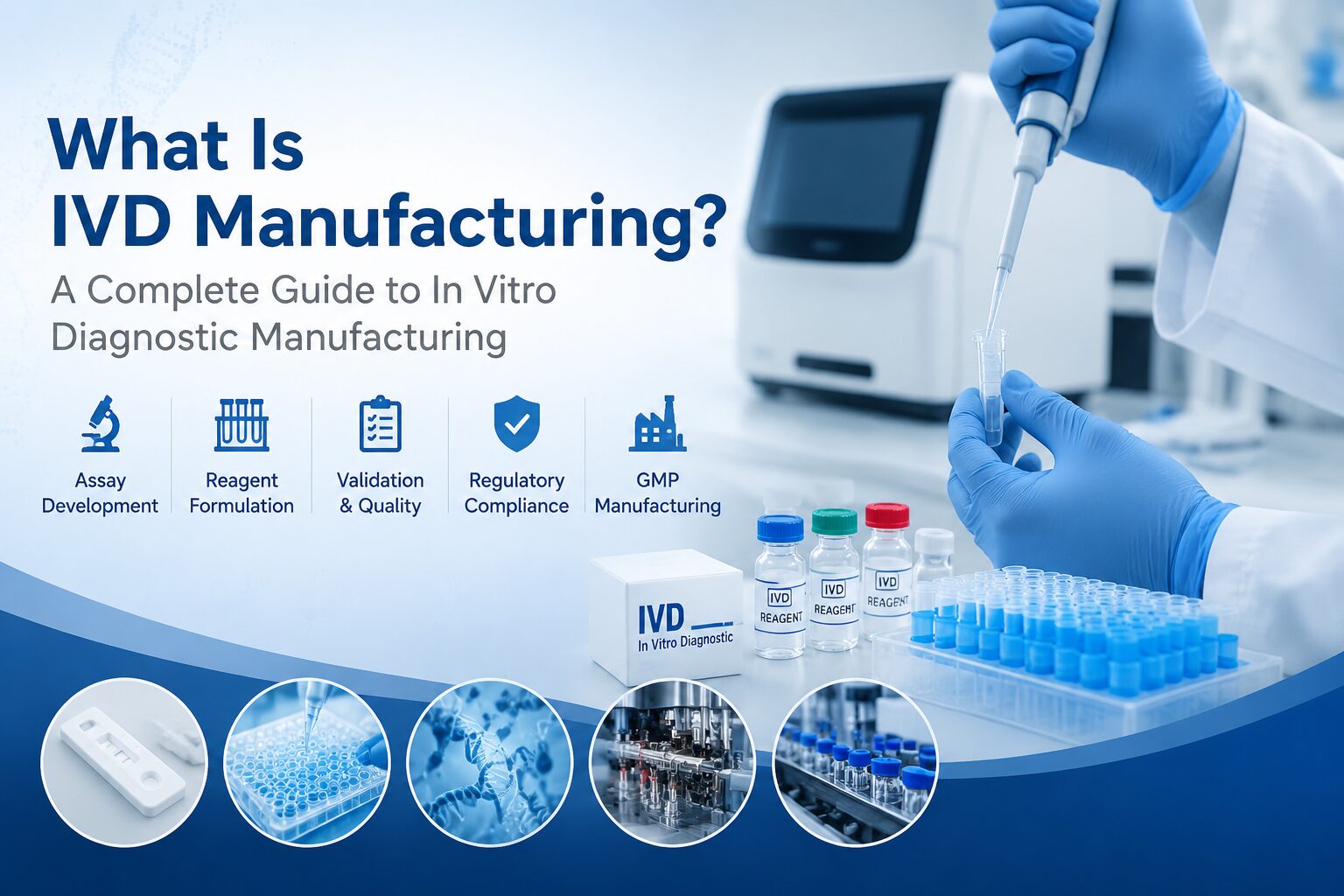
Understanding IVD Manufacturing in Modern Global Healthcare
In vitro diagnostic (IVD) manufacturing encapsulates the full spectrum of research, scaled production, performance verification and commercial rollout for diagnostic devices designed to analyze human biological samples outside a living body. Sample matrices processed within IVD facilities cover whole blood, serum, plasma, urine, oral fluid, tissue homogenates and other bio-specimens collected from patients for clinical testing.
These diagnostic tools equip clinicians to identify acute and chronic illnesses, track long-term health metrics, gauge therapeutic response and deliver data-backed clinical judgements. The scope of IVD technologies spans everyday self-testing glucose strips to sophisticated molecular platforms deployed for cancer screening and infectious pathogen surveillance. Without reliable IVD output, contemporary care pathways would lack objective lab evidence to guide patient management.
Against a global healthcare backdrop defined by precision medicine frameworks, early-stage disease screening and decentralized point-of-care testing, IVD production has evolved into a highly regulated, cross-disciplinary industrial sector. It merges applied bioscience, analytical chemistry, precision engineering, rigorous quality governance and international regulatory affairs into every stage of product development.
This definitive handbook breaks down end-to-end IVD manufacturing workflows, core technical platforms, non-negotiable quality benchmarks, cross-border compliance rules and emerging market shifts shaping the diagnostic space through 2026 and beyond.
Core Definition: What Does IVD Stand For?
IVD is shorthand for In Vitro Diagnostic.
The Latin-derived phrase “in vitro” translates literally to “within glass”, referencing laboratory testing conducted under controlled environmental conditions separate from the human organism.
Manufactured IVD kits and instruments analyze biological specimens to generate actionable clinical insights across these core use cases:
- Symptomatic and asymptomatic disease diagnosis
- Population-wide disease screening programmes
- Patient prognosis risk stratification
- Ongoing therapeutic monitoring
- Companion diagnostic pairing for targeted pharmaceuticals
- Preventative wellness assessment
- National and cross-border public health surveillance
Widely Deployed Commercial IVD Product Examples
- Rapid antigen and molecular kits for viral respiratory pathogens including COVID-19
- At-home and clinical lateral flow pregnancy test cassettes
- Benchtop and portable blood glucose monitoring systems
- Enzyme-linked immunosorbent assay (ELISA) reagent panels
- Chemiluminescence immunoassay (CLIA) bulk reagents
- Real-time polymerase chain reaction (PCR) amplification kits
- Next-generation sequencing (NGS) library preparation and diagnostic assays
- Tumour biomarker quantitative detection kits
- Integrated high-throughput infectious disease testing analysers
Defining IVD Manufacturing End-to-End
IVD manufacturing describes the full industrial pipeline that transforms preliminary lab assay prototypes into fully validated, batch-consistent, regulation-aligned commercial diagnostic goods. It extends far beyond simple bulk reagent mixing and packaging.
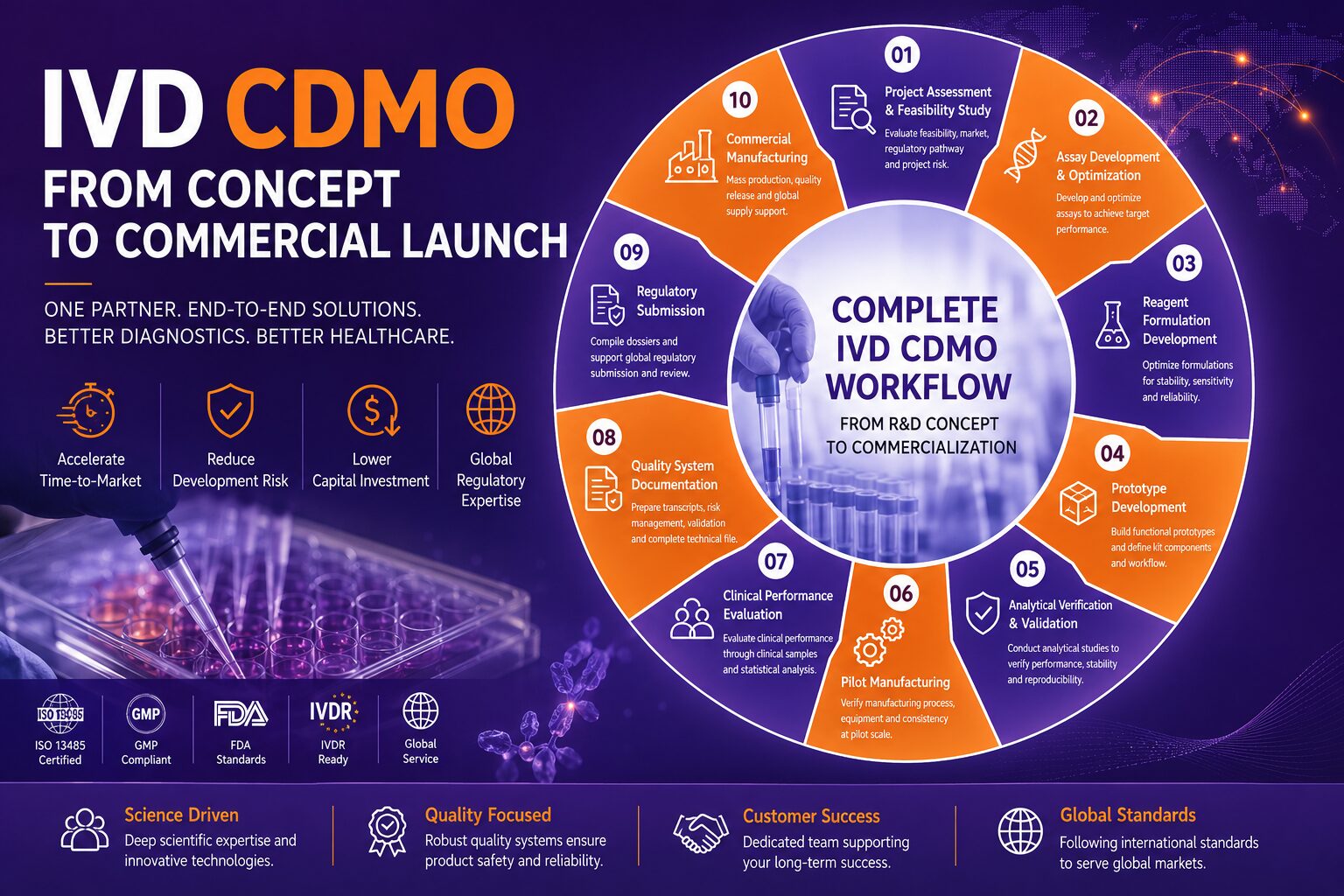
A mature, compliant IVD production operation integrates ten interconnected functional pillars:
- Target product research and proof-of-concept feasibility studies
- Custom assay design and detection chemistry optimisation
- Stable, long-life reagent formulation engineering
- Comprehensive incoming raw material qualification and batch screening
- Rigorous analytical performance validation trials
- Scaled pilot production process lock-in and equipment qualification
- Multi-centre clinical performance validation with human specimen cohorts
- Full implementation of certified quality management systems
- Compilation of technical dossiers for global regulatory submissions
- Steady-state large-volume commercial manufacturing and post-market oversight
The foundational objective guiding every production activity is consistent, unchanging test accuracy across the entire shelf life of each IVD product batch. Minor process drift or formulation variance risks skewed patient results, making repeatability the central manufacturing priority.
Primary IVD Product Classifications & Core Technologies
1. Immunodiagnostic Reagents & Kits
Immunoassays leverage specific antigen-antibody binding interactions to quantify trace disease biomarkers within patient samples.
Dominant technical platforms: ELISA, CLIA, fluorescence immunoassay (FIA), lateral flow rapid test strips
Key real-world applications:
- Screening for bacterial and viral infectious agents
- Endocrine and hormone level quantification
- Acute cardiac injury marker detection
- Circulating tumour antigen measurement
- Autoimmune disorder antibody profiling
2. Molecular Diagnostic Assays
Molecular IVD platforms target and amplify nucleic acid material — DNA and RNA — to identify genetic sequences linked to illness.
Core technical workflows: Standard PCR, reverse-transcription RT-PCR, quantitative qPCR, digital droplet PCR, clinical NGS panels
Industry use cases:
- Rapid pathogen identification from patient swabs and blood
- Solid tumour and liquid biopsy oncology diagnostics
- Hereditary germline genetic disorder screening
- Pharmacogenomic testing to match patients with compatible drug therapies
3. Clinical Chemistry Reagent Panels
Clinical chemistry IVDs quantify soluble biochemical markers present in serum, plasma and urine to assess organ function and metabolic health.
Common measured biomarkers: Blood glucose, total and LDL cholesterol, liver enzyme panels, renal filtration markers, serum electrolytes
4. Hematology Diagnostic Systems
Hematology manufacturing focuses on reagents and diluents used to enumerate and characterise full blood cell populations.
Primary clinical applications:
- Complete blood count (CBC) routine lab testing
- Iron-deficiency anaemia screening and monitoring
- Abnormal white blood cell population screening for leukaemia indicators
- Quantifying immune cell shifts during systemic infection
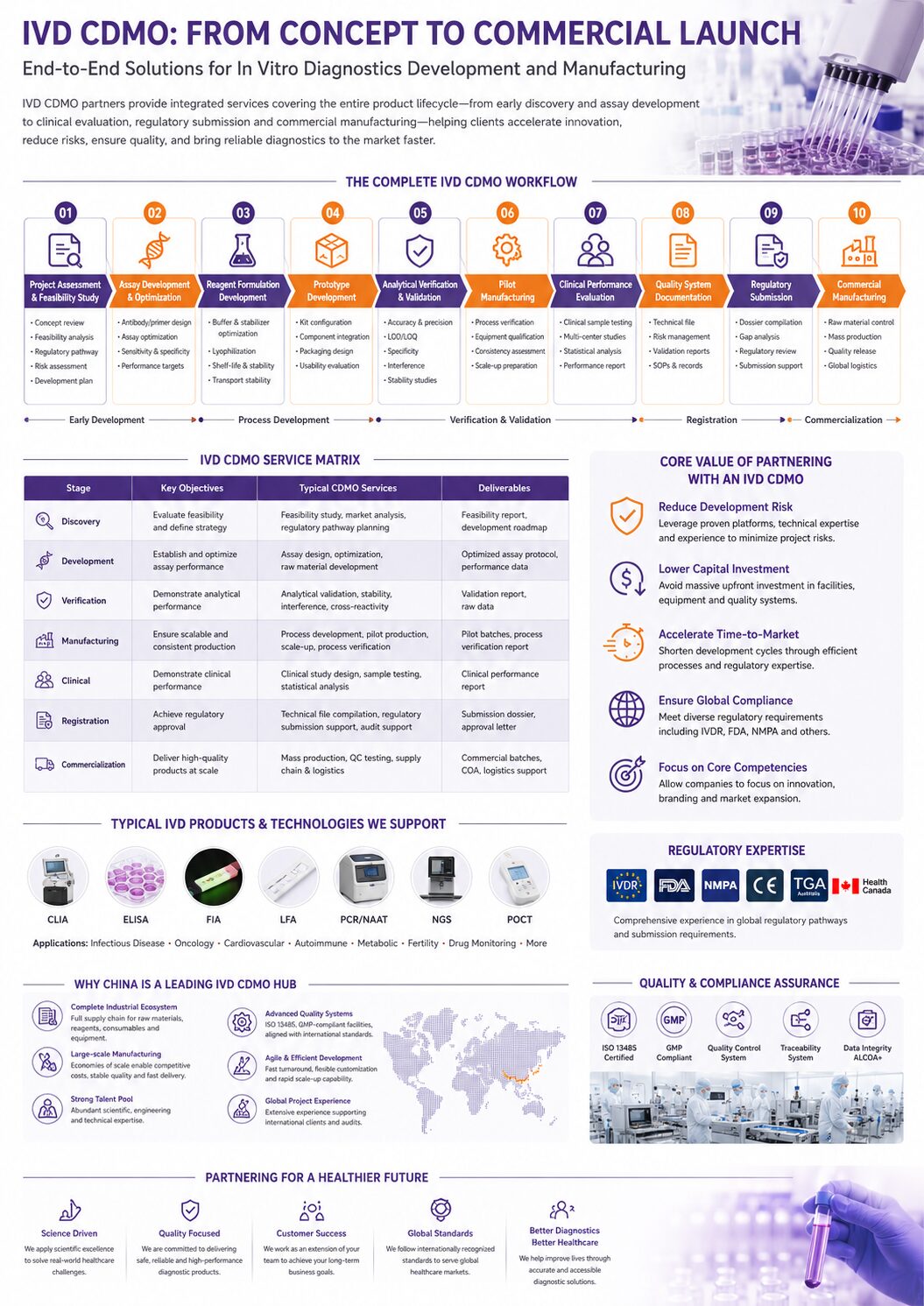
The Full Ten-Stage IVD Manufacturing Lifecycle
Stage 1: Product Concept Validation & Market Feasibility Analysis
Every commercial IVD begins with data-backed market and scientific due diligence before lab work commences.
Development teams evaluate critical factors to de-risk the project:
- Unmet clinical demand within target global markets
- Target biomarker stability and clinical specificity
- Selection of cost-effective, scalable detection technology platforms
- Competitive landscape review of existing marketed assays
- Mapping of relevant regional regulatory submission pathways
This early-stage assessment determines whether the proposed diagnostic can hit required clinical sensitivity and specificity thresholds for commercial launch.
Stage 2: Custom Assay Design & Core Detection Chemistry Development
Lab scientists build out the core reaction architecture that underpins the test’s performance. Typical development activities include:
- High-throughput antibody clone screening for immunoassays
- Custom oligonucleotide primer and fluorescent probe design for molecular tests
- Prioritisation of robust, disease-specific target biomarkers
- Iterative optimisation of thermal, pH and incubation reaction parameters
- Development of signal amplification workflows to boost low-biomarker detection limits
All decisions taken here establish the non-negotiable technical foundation of the finished diagnostic kit.
Stage 3: Stabilised Reagent Formulation Engineering
Reagent formulation represents the most sensitive, proprietary segment of the entire IVD manufacturing workflow. Formulation scientists fine-tune every component to extend shelf stability while preserving signal performance:
- Optimised buffer salt systems to maintain reaction pH
- Protein and nucleic acid stabilising excipients
- Non-toxic preservatives to inhibit microbial contamination
- Fluorescent, chemiluminescent or enzymatic reporter label concentrations
- Freeze-drying and liquid storage condition testing
Even micro-adjustments to stabiliser ratios or buffer composition can drastically lower test precision and raise false result rates for end users.
Stage 4: Rigorous Raw Material Qualification & Supplier Batch Control
Every incoming biological and chemical input directly shapes final assay reliability. Critical qualified raw materials used across IVD production include:
- Monoclonal and polyclonal antibody clones
- Purified recombinant target proteins
- Thermostable polymerases and conjugated enzymes
- Synthetic oligonucleotide strands
- Superparamagnetic separation microbeads
- Fluorescent and luminescent tracer labels
Manufacturers enforce strict incoming quality control (IQC) testing for every raw material delivery batch to eliminate lot-to-lot performance inconsistency at the source. Long-term supplier audit schedules form a mandatory part of compliance frameworks.
Stage 5: Analytical Validation Bench Trials
Analytical validation generates the empirical scientific evidence required to prove the assay meets pre-defined performance specifications before human clinical testing begins. Standard trial packages cover:
- Quantitative accuracy against reference standard materials
- Intra-assay repeatability and inter-assay reproducibility
- Analytical sensitivity and clinical specificity metrics
- Formal limit of detection (LOD) and limit of quantitation (LOQ) characterisation
- Interference testing for common patient sample contaminants (lipids, bilirubin, haemolysis)
- Cross-reactivity screening against non-target biomarkers and related pathogens
- Real-time and accelerated reagent stability shelf-life testing
All validation datasets become core documentation within regulatory technical files for market approval.
Stage 6: GMP-Compliant Pilot Manufacturing Scaling
Pilot production acts as the critical bridge between small-scale lab benchtop development and full commercial manufacturing runs. Core pilot-stage deliverables:
- Full process verification under cleanroom GMP conditions
- Installation, operational and performance qualification (IQ/OQ/PQ) for all production equipment
- Cross-batch reproducibility testing under simulated full-volume production parameters
- Preliminary long-term stability validation using pilot-manufactured kits
Batches generated during pilot scale-up frequently serve as the test articles required for formal clinical performance trials and regulatory audit inspections.
Stage 7: Multi-Centre Clinical Performance Evaluation
Clinical trials confirm the real-world diagnostic utility of the assay when processed on actual patient bio-specimen cohorts. Key clinical trial endpoints measured and documented:
- Positive percent agreement (PPA) against gold-standard reference testing
- Negative percent agreement (NPA) with confirmed disease-negative samples
- Clinical sensitivity and clinical specificity population metrics
- Positive and negative predictive value calculations for intended patient populations
Verified clinical datasets remain a mandatory prerequisite for securing marketing authorisation across nearly all global healthcare jurisdictions.
Stage 8: Certified Quality Management System (QMS) Deployment
A fully embedded, audit-ready quality governance system forms the operational backbone of every compliant IVD manufacturing facility. Production sites maintain active alignment with these global standards:
- ISO 13485 international medical device quality management standard
- US FDA Quality System Regulation (21 CFR Part 820 QSR)
- EU IVDR (In Vitro Diagnostic Devices Regulation) mandatory compliance rules
- Regional national medical device authority standards (NMPA, TGA, PMDA etc.)
Non-negotiable core QMS processes integrated daily into manufacturing:
- End-to-end risk management per ISO 14971
- Formal engineering and manufacturing change control protocols
- Corrective and preventive action (CAPA) tracking for all process deviations
- Continuous supplier qualification and performance auditing
- Version-controlled document management for all SOPs and batch records
- Mandatory recurring staff training and competency assessment
Stage 9: Global Regulatory Dossier Submission & Approval
Before commercial product distribution can commence, manufacturers must secure official marketing clearance from relevant medical device regulators. Primary regional submission pathways:
United States
- FDA 510(k) substantial equivalence clearance
- De Novo classification for novel low-to-moderate risk IVD platforms
- Premarket Approval (PMA) for high-risk complex molecular and companion diagnostics
European Union
- IVDR compliance and CE marking classification (Class A through Class D)
China Mainland
- NMPA medical device registration certification for imported and domestic IVD kits
Additional Major Markets
- UKCA marking for the United Kingdom
- TGA listing and approval (Australia)
- PMDA certification (Japan)
- Health Canada medical device licensing
Regulatory technical files require exhaustive compilation of assay design records, full analytical and clinical validation data, QMS audit reports and complete manufacturing process documentation.
Stage 10: Steady-State Commercial Manufacturing & Post-Market Surveillance
Once all regional market approvals are secured, facilities transition to consistent high-volume commercial production with four central operational priorities:
- Scalable, repeatable batch production aligned with global demand forecasts
- Diversified, resilient raw material supply chain management
- Long-term unit cost optimisation without compromising quality benchmarks
- Real-time in-process and finished-batch quality monitoring
- Ongoing post-market clinical surveillance and adverse event reporting
The ultimate operational goal is consistent delivery of uniform, clinically reliable diagnostic kits at commercial production volumes for worldwide clinical and consumer markets.
Why Multi-Layered Quality Control Remains Indispensable for IVD Production
Unlike general consumer goods, every IVD test output directly shapes clinician diagnosis and patient treatment pathways. Even minor unmonitored process variation during manufacturing carries tangible clinical risks:
- Erroneous false-positive results triggering unnecessary invasive testing
- False-negative outcomes that delay critical disease intervention
- Inaccurate lab readings leading to misdiagnosis and inappropriate therapy
- Escalated overall healthcare expenditure from repeat testing and corrective care
For this reason, structured quality control checkpoints are embedded into every single phase of the manufacturing lifecycle, rather than applied as a single end-of-production check.
Modern GMP IVD facilities implement overlapping QC layers:
- Incoming raw material QC screening for all supplier deliveries
- Continuous in-process QC sampling during reagent mixing, filling and assembly
- Full finished product batch release QC prior to packaging and shipment
- Cleanroom environmental particulate and microbial monitoring
- Long-term ongoing real-time stability testing across production lots
- Periodic cross-batch performance verification against reference standards
Core Industry Challenges Facing Modern IVD Manufacturers
1. Inherent Raw Material Batch Variability
Biological starting materials such as antibody clones and recombinant proteins naturally display minor inherent variation between supplier production runs. Standardising performance across incoming batches while maintaining consistent assay output stands as one of the sector’s most persistent technical hurdles.
2. Fragmented, Rapidly Evolving Global Regulatory Rules
Regional medical device compliance frameworks update frequently, with shifting classification rules, technical dossier requirements and audit standards across the EU, US, China and APAC markets. Manufacturers must continuously update internal processes and documentation to maintain cross-border market access.
3. Fragile Global Raw Material Supply Chains
Geopolitical disruptions, manufacturing bottlenecks and logistics delays regularly threaten consistent supply of critical high-purity biological and chemical inputs. Forward-thinking producers mitigate risk via dual-sourcing strategies and diversified supplier networks across multiple geographic regions.
4. Long-Term Reagent Stability Engineering
Diagnostic reagents must retain full functional performance through manufacturing storage, cross-continental shipping, clinical facility refrigeration and end-user shelf storage windows. Developing stabilised formulations that extend shelf life without diluting test signal strength demands years of iterative formulation research.
The Strategic Value of Specialised IVD CDMO Partners
As diagnostic platforms grow increasingly technically complex, independent diagnostic developers, biotech startups and pharmaceutical brands frequently outsource production to dedicated IVD Contract Development and Manufacturing Organisations (CDMOs). Specialised IVD CDMOs deliver full-spectrum outsourced support across the entire product lifecycle:
- Early-stage custom assay design and optimisation
- Proprietary stabilised reagent formulation development
- Fully controlled GMP pilot scale-up manufacturing
- High-volume commercial kit production and sterile filling
- Analytical and clinical validation study coordination
- Complete regulatory technical dossier writing and submission support
- Formal technology transfer programmes for in-house production handover
- Post-launch batch manufacturing and global distribution support
Partnering with an established IVD CDMO cuts internal capital expenditure requirements for cleanroom buildouts and production equipment, slashes total product development timelines and accelerates time-to-market across global diagnostic markets.
Transformative Future Trends Reshaping IVD Manufacturing (2026–2030)
1. Fully Automated Smart Cleanroom Production
End-to-end robotic reagent filling, assembly and labelling systems eliminate human handling variability, boost batch throughput and standardise production output across large manufacturing runs. Integrated digital manufacturing platforms log every process parameter for full audit traceability under GMP.
2. Expanded Molecular Diagnostic Adoption
PCR, digital PCR and clinical NGS assays continue transitioning from reference lab niche tools into routine primary care testing workflows, driving sustained demand for scalable molecular reagent manufacturing capacity globally.
3. Rapid Point-of-Care (POCT) Test Expansion
Compact, portable, user-friendly lateral flow and miniaturised cartridge diagnostics decentralise testing away from central lab facilities, enabling real-time diagnosis at clinics, pharmacies and patient home settings and reshaping manufacturing format requirements.
4. AI Integration for Diagnostic Data Workflows
Artificial intelligence algorithms pair seamlessly with IVD analyser output to automate biomarker result interpretation, cut clinician manual review workload and enhance early disease detection accuracy — with manufacturers designing hardware and reagent systems natively compatible with AI analysis pipelines.
5. Precision Medicine-Driven Custom Assay Demand
Personalised targeted therapy frameworks fuel growing market demand for highly specialised low-to-medium batch companion diagnostic assays, requiring flexible, adaptable manufacturing workflows capable of frequent product changeovers without quality drift.
Final Conclusion
IVD manufacturing represents a cross-disciplinary industrial discipline that translates laboratory scientific breakthroughs into reliable, globally distributed diagnostic tools under strict clinical and regulatory guardrails. It unifies assay design, proprietary reagent formulation, multi-phase performance validation, audit-ready quality governance, cross-border regulatory compliance and scalable commercial production into one cohesive lifecycle.
As healthcare systems worldwide prioritise early disease detection, personalised precision care and decentralised patient testing, robust, compliant IVD manufacturing capacity grows increasingly vital to global public health infrastructure. Organisations combining deep applied bioscience expertise, up-to-date regulatory intelligence, uncompromising quality standards and flexible scalable production capacity will define the next generation of diagnostic innovation across international markets.
For biotech founders, diagnostic developers and medical device firms launching novel test platforms, comprehensive mastery of IVD manufacturing core principles is non-negotiable to achieve seamless regulatory clearance, consistent product performance and sustained long-term market competitiveness.
Frequently Asked Questions (FAQs)
Q: How would you define IVD manufacturing in simple terms?
A: IVD manufacturing covers every stage of designing, validating, mass-producing and commercially distributing diagnostic kits that analyse patient biological samples outside the human body for clinical decision-making.
Q: Which key regulatory standards govern global IVD manufacturing facilities?
A: Primary frameworks include US FDA medical device QSR rules, the EU IVDR regulation, China’s NMPA medical device registration requirements and the globally recognised ISO 13485 quality management system standard for all IVD and medical device producers.
Q: What core differences separate IVD manufacturing from pharmaceutical drug production?
A: IVD manufacturing produces analytical testing tools that generate clinical diagnostic data to guide care decisions. Pharmaceutical manufacturing develops therapeutic and preventative drug compounds designed to directly treat or block disease progression in patients.
Q: Why is ISO 13485 certification a core requirement for IVD manufacturers?
A: ISO 13485 sets out harmonised, internationally accepted quality management protocols exclusive to medical devices and in vitro diagnostics. Compliance verifies consistent production controls, risk mitigation and traceability, safeguarding end-user patient safety across all marketed IVD products.
Q: What core services does a specialised IVD CDMO deliver to diagnostic developers?
A: IVD CDMOs provide outsourced end-to-end contract services including custom assay development, reagent formulation, GMP pilot and commercial manufacturing, validation trial coordination, regulatory dossier preparation and full technology transfer for diagnostic kit programmes.
Author Profile

- Written by the IVDCDMO technical and regulatory team, with expertise in diagnostic assay development, GMP manufacturing, ISO 13485 systems, and global IVD commercialization for biotech innovators worldwide.
Latest entries
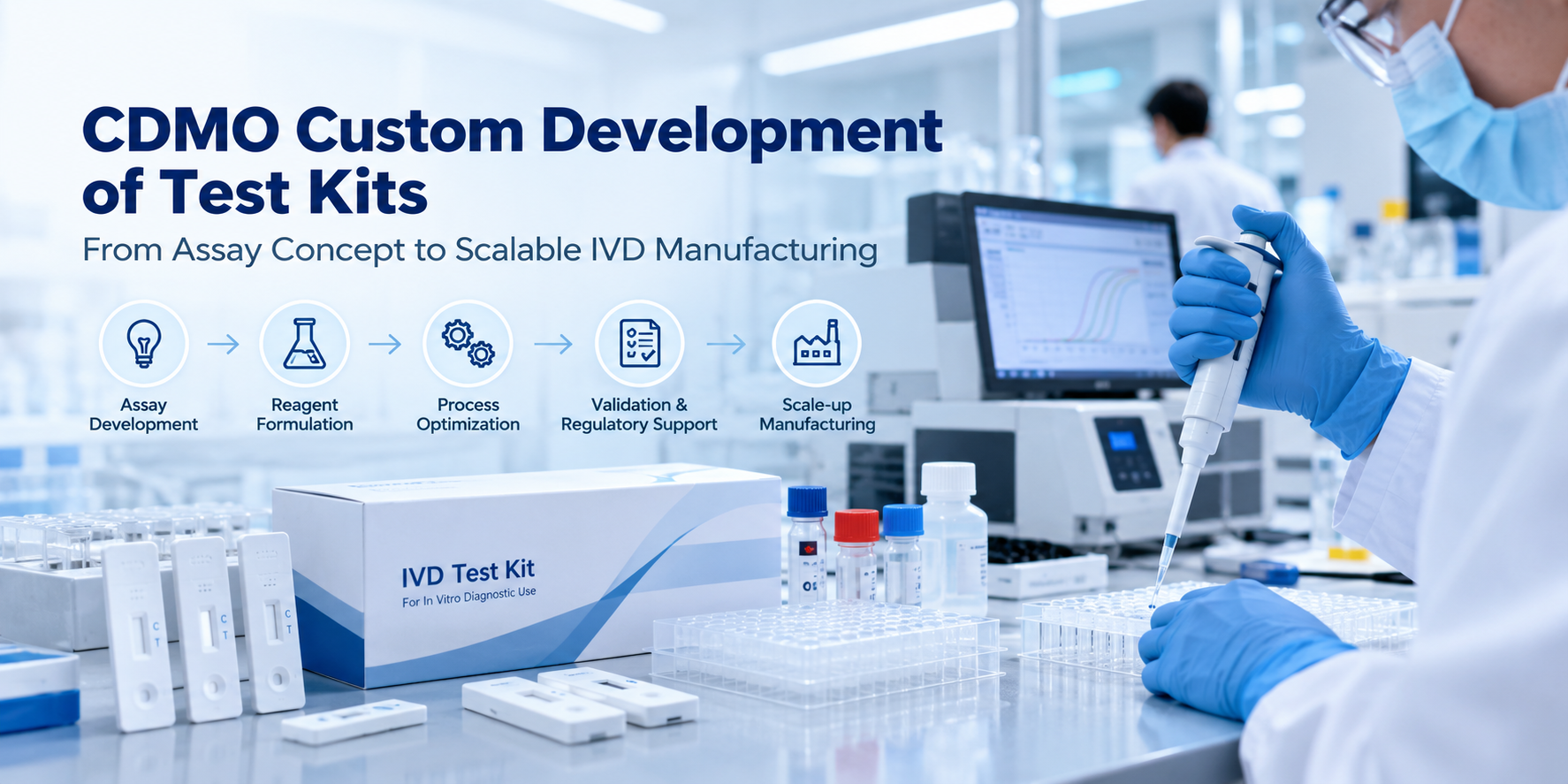
 Assay DevelopmentSeptember 23, 2026CDMO Custom Development of Test Kits: From Assay Concept to Scalable IVD Manufacturing
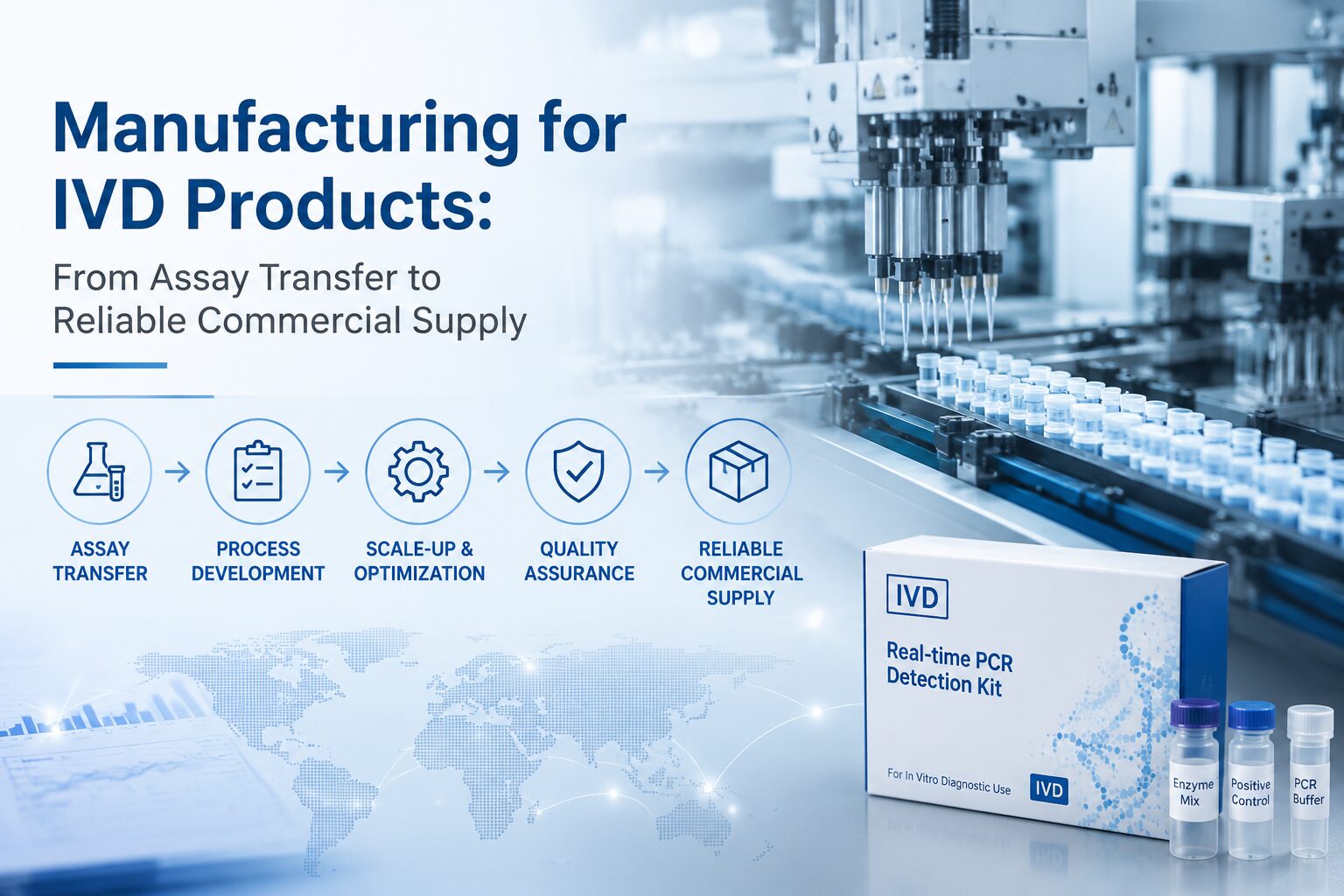
- IVD ManufacturingJuly 24, 2026Manufacturing for IVD Products: From Assay Transfer to Reliable Commercial Supply
- IVD ManufacturingJuly 13, 2026IVD Contract Manufacturing Cost: NRE, Tooling, Validation, MOQ and Unit Economics
- KnowledgeJuly 6, 2026IVD CDMO vs CRO vs CMO: Which Partner Do You Need at Each Development Stage?