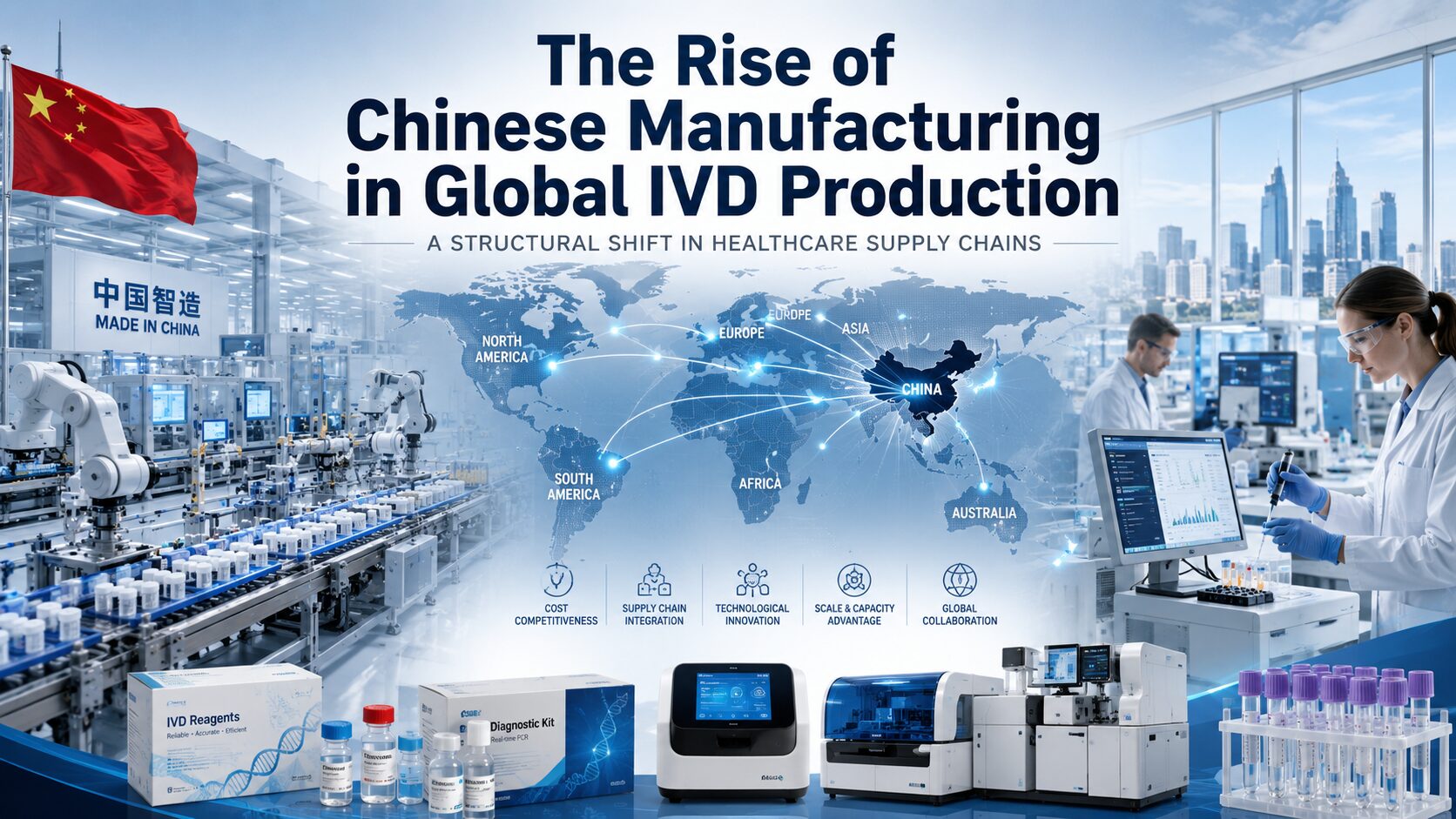
Over the past two decades, China has evolved from a low-cost manufacturing destination into the world’s largest industrial production powerhouse. What began with consumer goods and electronics has progressively expanded into high-value sectors including medical devices, pharmaceuticals, biotechnology, laboratory equipment, and in vitro diagnostics (IVD).
The implications extend far beyond manufacturing economics. The global healthcare supply chain is undergoing a structural reconfiguration in which China is increasingly becoming not only a manufacturing center, but also a critical innovation, engineering, and commercialization hub.
For the global IVD industry, this transition represents one of the most significant long-term shifts since the emergence of modern molecular diagnostics. The question is no longer whether China will increase its influence in global IVD manufacturing, but how quickly market share will migrate and which segments will experience the most profound transformation.
This white paper provides a comprehensive analysis of China’s IVD manufacturing ecosystem, its historical evolution, current capabilities, and future trajectory. We present a data-driven assessment of market share migration across diagnostic segments, examine the strategic responses of global industry leaders, and outline three plausible scenarios for the global IVD manufacturing landscape by 2035.
Global IVD Manufacturing Landscape: A Historical Timeline (2010–2035)
The global IVD manufacturing industry has experienced a profound geographic shift over the past 15 years, with China emerging as the primary growth engine. This transformation has occurred in three distinct phases:
| Period | Phase | Key Characteristics | China’s Global Manufacturing Share |
| 2010–2015 | Low-Cost OEM | Labor-intensive production of basic consumables and simple instruments | 5–8% |
| 2016–2019 | ODM & Localization | Development of design capabilities, establishment of MNC manufacturing hubs | 8–12% |
| 2020–2022 | COVID-19 Inflection Point | Massive scale-up of molecular diagnostics and POCT production, global supply chain validation | 12–15% |
| 2023–2025 | Technology Convergence | Proprietary platform development, CDMO expansion, domestic substitution acceleration | 15–18% |
| 2026–2030 | Global Brand Building | International market expansion, high-end segment penetration | 18–24% |
| 2031–2035 | Global Manufacturing Hub | End-to-end supply chain integration, innovation leadership in selected segments | 22–35% (scenario-dependent) |
Source: IVDCDMO.com Industry Intelligence, Kalorama Information, China Medical Device Industry Association
China Has Become the World’s Manufacturing Superpower
According to the United Nations Industrial Development Organization (UNIDO) and World Bank datasets, China now represents approximately 28–30% of global manufacturing value added, exceeding the combined manufacturing output of the United States, Germany, and Japan. Long-term industrial projections suggest China’s share could stabilize at 30–32% during the coming decade as other emerging economies develop their industrial bases.
China’s manufacturing strength is no longer concentrated in labor-intensive industries. Today, the country dominates numerous advanced manufacturing ecosystems, including:
- Medical devices and advanced medical imaging
- Biotechnology instruments and automation toolkits
- Laboratory automation and liquid handling robotics
- Diagnostic reagents and raw biochemical materials
- Electronics, microfluids, and semiconductors
- Industrial robotics and smart factory architecture
- Precision engineering and optoelectronic modules
- High-performance battery technologies
- Pharmaceutical intermediates and APIs
At the same time, China continues investing heavily in automation and industrial digitization, installing more industrial robots annually than all other nations combined and rapidly increasing factory productivity. Between 2018 and 2024, China’s industrial robot density increased from 140 to 422 units per 10,000 employees, surpassing the global average of 151 units.
These developments fundamentally alter the economics of healthcare manufacturing, creating a competitive advantage that extends well beyond labor costs.
Why the IVD Industry Is Particularly Vulnerable to Manufacturing Migration
Historically, the global IVD industry was dominated by multinational corporations (MNCs) headquartered in North America, Europe, and Japan. Key industry leaders include Roche Diagnostics, Abbott Laboratories, Siemens Healthineers, Danaher Corporation, and bioMérieux. For decades, manufacturing and R&D activities were concentrated near corporate headquarters to protect intellectual property and maintain quality control.
However, several structural trends have gradually shifted production toward Asia:
1. Unprecedented Cost Pressure
Healthcare systems worldwide face existential pressure to reduce diagnostic spending. Public procurement programs, reimbursement controls, and competitive tendering have compressed margins across multiple diagnostic categories. In the European Union, for example, diagnostic reagent prices have declined by an average of 3–5% annually since 2019.
Manufacturers increasingly seek:
- Lower production costs
- Scalable manufacturing capacity
- Faster supply chain response
- Reduced inventory risk
China offers significant advantages in all four areas, with production costs typically 30–50% lower than in Western Europe or North America for comparable quality standards.
2. Unmatched Supply Chain Maturity
IVD manufacturing requires access to a complex ecosystem of specialized suppliers for:
- Medical-grade plastics and precision injection molding
- Microelectronics, biosensors, and optoelectronic modules
- Precision fluidics, machining, and core metal components
- Antibodies, enzymes, magnetic beads, and biological reagents
- Packaging systems, cold-chain components, and labeling
- Sterile manufacturing and validation services
China possesses perhaps the world’s most comprehensive industrial supply chain ecosystem. In major manufacturing clusters such as Shenzhen, Suzhou, and Shanghai, suppliers can deliver custom components within 24–72 hours rather than the 4–6 weeks typical in Western markets. This unparalleled supply chain density is extremely difficult for competing regions to replicate, as it represents decades of accumulated industrial infrastructure and engineering expertise.
3. Engineering Talent Expansion
The perception of China as merely a low-cost manufacturing destination is increasingly outdated. China graduates approximately 1.4 million engineers and 400,000 life science professionals annually, creating a massive talent pool for the medical device industry.
As a result, many diagnostic companies now establish advanced manufacturing centers, application laboratories, product development teams, reagent optimization facilities, and regulatory support functions within China rather than limiting operations to contract production. By 2025, all five major global IVD companies had established significant R&D and manufacturing operations in China.
China’s Domestic IVD Market: The Foundation for Global Leadership
The rise of Chinese manufacturing cannot be separated from the rise of China’s domestic healthcare market, which has become the second-largest IVD market in the world after the United States, representing a vital pillar of the global diagnostic macrocosm.
Several structural factors support continued expansion:
- Rapid population aging (280 million people aged 60+ by 2025)
- Expanded cancer screening, prenatal testing, and early detection programs
- Precision medicine adoption and personalized healthcare ecosystems
- Molecular diagnostics and decentralized clinical genetic testing growth
- Independent clinical laboratory (ICL) market expansion and consolidation
- “Healthy China 2030” national healthcare infrastructure initiatives
The enormous domestic demand creates economies of scale that few markets can match. For manufacturers, China is no longer simply an export base. It is increasingly the launchpad where products are developed, clinically validated, manufactured, and commercialized before being scaled globally.
The COVID-19 Turning Point: A Paradigm Shift in Global Perception
The COVID-19 pandemic represented an irreversible inflection point for China’s IVD industry. What began as a public health crisis evolved into a global validation of China’s manufacturing scalability, speed-to-market, and technical agility.
Pandemic-Driven Transformation
Between 2020 and 2022, China became the world’s primary engine for pandemic-related diagnostic supply chains:
- 2020 Diagnostic Product Export Surge: Driven by global demand, China’s total medical device and diagnostic export volume hit a record USD 53 billion in 2020.
- Massive Industrial Mobilization: At peak production intervals in early 2022, Chinese manufacturers exported hundreds of millions of antigen and PCR tests monthly, supporting healthcare frameworks in over 180 countries.
- Regulatory Milestones: Over 700 Chinese IVD products obtained CE marking, and dozens secured FDA Emergency Use Authorizations (EUAs) or clearances, creating unprecedented global regulatory footprints for domestic brands.
Long-Term Industry Impacts
The pandemic accelerated three fundamental shifts in the global IVD industry:
- Supply Chain Resilience Reassessment: Global healthcare systems and manufacturers realized that over-reliance on single-source, highly concentrated Western manufacturing created severe operational vulnerabilities. China demonstrated an unmatched ability to scale complex production rapidly and reliably during an international gridlock.
- Technology Validation: Chinese companies proved they could develop and manufacture high-complexity diagnostic hardware and chemistry—including real-time PCR instruments, automated nucleic acid extraction systems, and rapid digital immunoassay readers—that met strict international quality standards.
- Capital Accumulation for R&D Reinvestment: The massive influx of revenue allowed leading Chinese IVD companies to invest heavily in next-generation R&D, advanced manufacturing automation, and localized overseas infrastructure, permanently altering the competitive balance.
From OEM Manufacturing to Technology Ownership
The evolution of China’s medical manufacturing industry has occurred in three distinct phases:
- First phase (1990s–2000s): Original Equipment Manufacturing (OEM), where Chinese companies produced basic parts and products to foreign designs and specifications.
- Second phase (2010s): Original Design Manufacturing (ODM), where Chinese companies matured to develop their own product designs, instrument chassis, and formulations for foreign brands.
- Third phase (2020s–present): Independent innovation and technology ownership, characterized by proprietary platforms, robust patent portfolios, and global brand building.
Today, the industry is anchored in this third stage, with Chinese companies investing heavily in:
- Proprietary high-throughput diagnostic instrument platforms
- Independent intellectual property portfolios and global cross-licensing
- Advanced raw materials, recombinant proteins, and enzyme technologies
- AI-assisted diagnostics and laboratory information systems (LIS)
- Molecular testing innovation, digital PCR, and microfluidics
- Next-generation sequencing (NGS) and clinical multi-omics technologies
This progression mirrors the trajectory previously observed in consumer electronics, telecommunications equipment, and renewable energy technologies. In many diagnostic categories, Chinese companies now compete directly with established multinational brands rather than serving solely as silent upstream suppliers.
Which IVD Segments Are Most Likely to Experience Market Share Transfer?
Not all diagnostic segments will evolve at the same pace. The greatest market-share migration is likely to occur in areas where manufacturing scale, cost efficiency, and supply chain integration matter most.
High Probability (5–10 Year Horizon)
Clinical Chemistry
Clinical chemistry systems are increasingly standardized, with well-established methodologies and limited differentiation between platforms. Manufacturing advantages significantly influence pricing competitiveness. Domestic manufacturers already control over 70% of the Chinese clinical chemistry market and are rapidly expanding their international presence in emerging markets across APAC, LATAM, and MEA.
Immunoassays
China has established substantial capabilities in chemiluminescence immunoassay (CLIA) reagent production and instrument engineering. While high-end specialty testing panels remain dominated by multinational corporations, domestic suppliers now control approximately 50% of the overall Chinese immunoassay market and are gaining rapid ground internationally through cost-effective, high-throughput benchtop systems.
Point-of-Care Testing (POCT)
POCT products benefit from high-volume production, simplified instrumentation, and efficient assembly, making them particularly suitable for large-scale manufacturing ecosystems. Chinese POCT manufacturers have achieved significant global market share in infectious disease testing, cardiac markers, and chronic disease monitoring.
Consumables and Reagents
Margins for general-purpose consumables (e.g., cuvettes, pipette tips, deep-well plates) and baseline reagents remain highly dependent on production efficiency. China’s manufacturing scale offers substantial advantages in these categories, with many global brands already sourcing a significant portion of their consumable lines from Chinese operations.
Medium Probability (10–15 Year Horizon)
Molecular Diagnostics
Molecular testing requires stronger intellectual property portfolios and complex regulatory navigation. Nevertheless, Chinese firms are rapidly increasing investment in this area. Polymerase chain reaction (PCR) technology has reached near-parity with global standards, and domestic manufacturers control over 60% of the Chinese PCR market, driving expansion into multiplex and syndromic testing arrays.
Next-Generation Sequencing (NGS) Support Products
Reagents, sample-preparation kits, and automated library preparation systems are increasingly being sourced from Asian manufacturers. Chinese player MGI Tech (华大智造) has emerged as an aggressive, fast-growing global challenger in the NGS sequencing instrument market, securing substantial domestic market share and expanding its footprint across Europe, Asia, and Latin America.
Hematology and Urinalysis
These segments have reached a high degree of technological maturity, with limited room for disruptive innovation. Domestic manufacturers already control over 60% of the Chinese hematology market, leveraging robust fluidic systems and mechanical reliability to scale up expansion in international medical tier-2 and tier-3 networks.
Lower Probability (15+ Year Horizon)
High-End Proprietary Platforms
Segments requiring decades of clinical validation, extensive installed bases, and highly protected intellectual property remain difficult to disrupt quickly. Examples include:
- Advanced, ultra-high-throughput clinical chemistry automation tracks and modular total laboratory automation (TLA)
- High-end digital pathology systems and advanced tissue diagnostics
- Clinical mass spectrometry-based diagnostic platforms (LC-MS/MS)
- Certain ultra-rare disease specialty diagnostics platforms
However, even these categories are experiencing gradual competitive pressure as Chinese companies accumulate clinical data, cross-border academic endorsements, and regulatory experience.
Global IVD Leaders’ China Manufacturing Strategies
All major global IVD companies have made significant investments in Chinese manufacturing and R&D capabilities. These investments have evolved from simple cost-reduction measures to strategic initiatives that support global supply chains and product localization.
Case Studies of Leading Multinational Corporations
Roche Diagnostics
- Suzhou Asia Manufacturing and R&D Site: Established in 2015, this is Roche’s flagship manufacturing and research facility in the Asia-Pacific region.
- Capital Expansion: Continued investments, including a landmark USD 420 million expansion, represent the company’s commitment to deepening its industrial footprint in China.
- Product Portfolio: Specializes in manufacturing reagents for oncology, cardiometabolic, infectious disease, and women’s health testing, integrating a full-scale R&D center focused on regional requirements.
Siemens Healthineers
- Shenzhen High-End Medical Device R&D and Production Base: Anchored by an investment exceeding RMB 1 billion (~USD 136 million), this site underpins Siemens’ deep localization strategy.
- Full-Line Localization: Localized core high-throughput systems and unveiled an extensive pipeline of “Made-in-China” products designed to serve both the domestic healthcare tier and export channels in emerging markets.
Danaher Corporation (Beckman Coulter)
- Suzhou Manufacturing and R&D Hub: Integrates advanced workflow engineering, instrument assembly, and reagent formulation.
- Automation Localization Milestone: The unveiling of the fully localized Biomek automated workstation family underscores Danaher’s strategy of fusing global quality standards with China’s rapid product iteration and manufacturing cycles.
Critical Challenges and Limitations
While China’s IVD industry has made remarkable progress, it faces structural challenges that will constrain and shape its global expansion:
1. Key Raw Material Import Dependence
This remains the most critical vulnerability of China’s IVD industry. High-end diagnostic raw materials and core components maintain an import dependence rate of 46.8% (2023), with certain specialized categories exceeding 70%:
- High-performance magnetic microspheres (90% imported)
- High-fidelity DNA polymerases and reverse transcriptases (85% imported)
- High-specificity monoclonal antibodies for rare panels (75% imported)
- Specialty fluorescent dyes, substrates, and high-precision fluidic/optical components (80% imported)
Global production of these materials remains highly concentrated among a small number of Western and Japanese companies, creating supply chain vulnerabilities.
2. Regulatory Barriers
International regulatory frameworks remain a demanding barrier for Chinese IVD manufacturers. The European Union’s In Vitro Diagnostic Medical Devices Regulation (IVDR) and the U.S. Food and Drug Administration (FDA) clearance pathways are rigorous and capital-intensive. Fewer than 10% of export-oriented Chinese IVD products have fully transitioned to CE IVDR certificates, requiring heavy compliance investments.
3. Geopolitical Risks and De-Risking Policies
Increasing geopolitical tensions have led to growing concerns about healthcare supply chain security. Several countries have implemented policies to reduce their dependence on Chinese medical products, including:
- U.S. restrictions regarding medical product procurement within specific government healthcare frameworks
- European Union “de-risking” strategies targeting critical public health supply chains
- National security reviews of foreign investments in sensitive healthcare and biological data spaces
4. Volume-Based Procurement (VBP) Impact
China’s national and provincial volume-based procurement (集采) programs have radically reshaped domestic market economics. Multiple rounds of VBP covering clinical chemistry, immunoassays, and molecular panels have triggered average price reductions exceeding 50%. While VBP has dramatically accelerated domestic substitution by stripping imported products of their price premiums, it has compressed operating margins, forcing domestic companies to shift from easy domestic growth to strict cost optimization or aggressive international expansion.
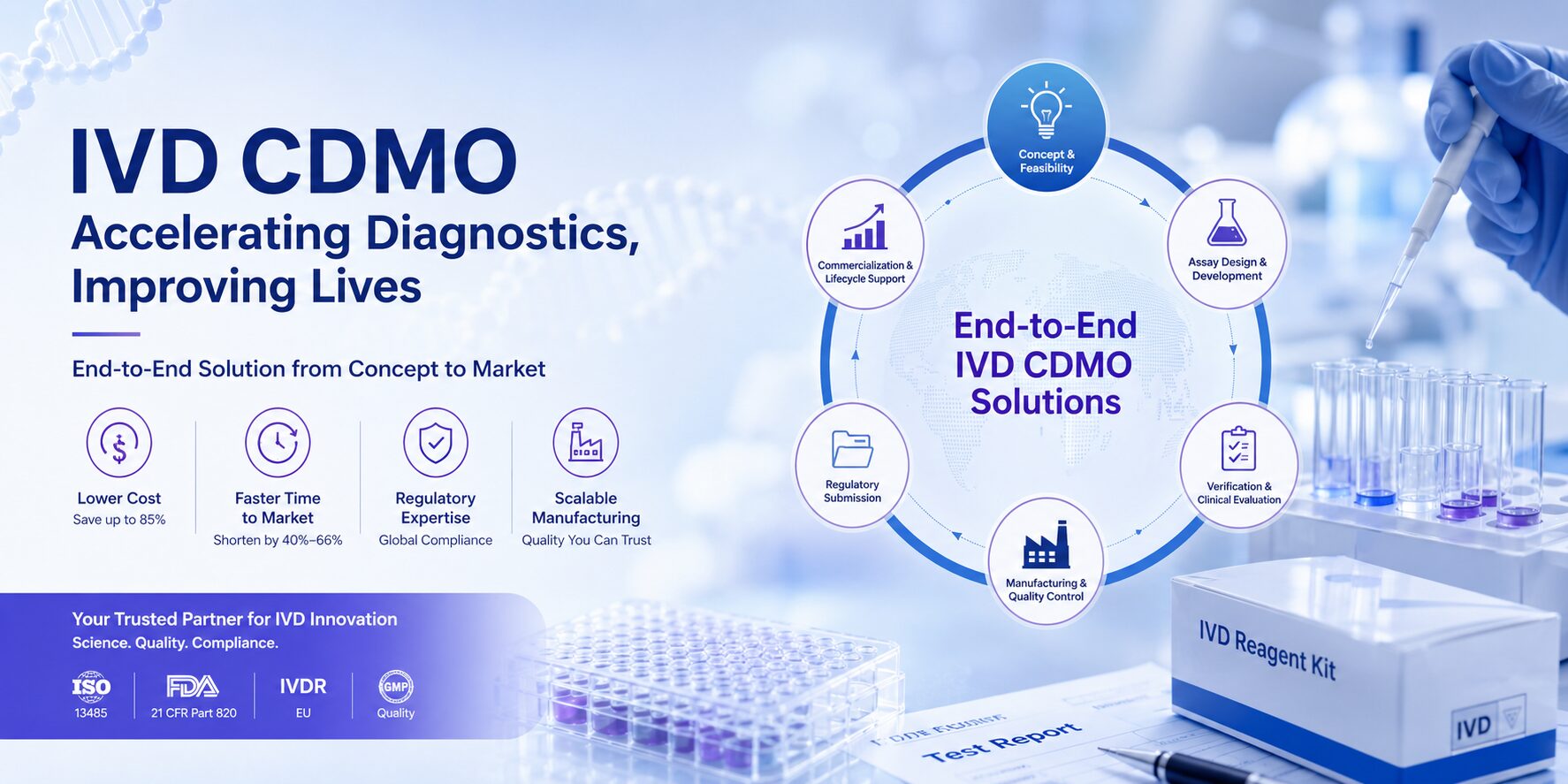
The IVD CDMO Revolution: Accelerating Market Share Migration
One of the most structural developments in modern healthcare manufacturing is the rapid expansion of contract development and manufacturing organizations (CDMOs). For international players and domestic entrants alike, this represents a major commercial lever to navigate market changes.
Market Size and Growth Projections
- 2024 Global IVD CDMO Market Size: Estimated at approximately USD 18.5 billion.
- 2024 China IVD CDMO Market Size: Estimated at approximately USD 2.2 billion, representing roughly 12% of the global market.
- Growth Disparity: The China IVD CDMO market is projected to expand at a CAGR of 14.0% through 2030, significantly outstripping the global average of 11.5%, pushing the domestic CDMO market projection to USD 5.1 billion by 2030.
The Regulatory Catalyst: The MAH System
A major catalyst for this growth is the comprehensive implementation of the Medical Device Marketing Authorization Holder (MAH) System (医疗器械注册人制度) in China. Historically, product registration and manufacturing licenses were tightly bound to the same entity. The MAH system legally decouples ownership of the product registration (the “holder”) from the actual production (the “manufacturer”). This allows international brands and local innovators to hold the intellectual property and registration certificates while legally outsourcing end-to-end manufacturing to specialized Chinese CDMO platforms, bypassing immense capital outlays.
Strategic Drivers for International Brands Utilizing Chinese CDMOs
[MNC / Innovator (MAH Holder)]
       │
       ▼ (Outsources Capital & Scale via MAH Framework)
[Chinese IVD CDMO Platform] ──► Benefits: 30-50% Cost Reduction
                            ──► Time-to-Market Cut by 12+ Months
                            ──► Local Supply Chain Integration (24-72h)
- Capital Expenditure Mitigation: Building an industrial, compliant IVD facility in Western economies can cost USD 50–150 million and take years. A CDMO partnership converts fixed infrastructure risks into variable operational costs.
- Time-to-Market Acceleration: Chinese CDMOs reduce development-to-commercialization timelines to 12–18 months, compared to 24–36 months typical in older infrastructures, providing a critical time advantage.
- Agile Scaling and Supply Integration: CDMOs enjoy direct proximity to localized clusters, unlocking component delivery times within 24–72 hours, optimizing inventory controls and neutralizing global logistics friction.
- Cost and Engineering Optimization: Fusing optimized assembly automation with skilled engineering reduces total manufacturing costs by 30–50%, allowing companies to preserve margins amid pricing pressures like VBP or international tendering.
Future Outlook: Three Scenarios for 2035
The future competitive landscape will not be defined solely by labor costs. Instead, success will depend on advanced automation, end-to-end supply chain integration, global regulatory expertise, engineering and scientific talent, digital manufacturing, and AI-enabled production systems.
We have developed three plausible scenarios for the global IVD manufacturing landscape by 2035, based on different assumptions about technological progress, regulatory environments, and geopolitical developments.
       ┌── Scenario 1: Conservative (22% Share) ──► High Geopolitical Friction / Slow Local Sourcing
       │
2035 ──┼── Scenario 2: Base Case (28% Share)  ──► Manageable Tensions / High Raw Material Autonomy
       │
       └── Scenario 3: Aggressive (35% Share)   ──► De-escalation / Global Regulatory Convergence
Scenario 1: Conservative Scenario (22% Global Manufacturing Share)
- Key Assumptions: Geopolitical decoupling intensifies, driving Western healthcare supply chains to implement aggressive “China-Plus-One” or near-shoring mandates. Regulatory barriers in Western markets remain highly restrictive, and domestic substitution for high-end raw materials stalls.
- Outcomes: China’s share of global IVD manufacturing output value rises modestly to 22% by 2035. Market migration is restricted to baseline chemistry, routine consumables, and lateral flow assays. Chinese brands expand primarily within emerging economic zones.
Scenario 2: Base Scenario (28% Global Manufacturing Share) – Most Likely Outcome
- Key Assumptions: Geopolitical tensions stabilize into manageable, structured compartmentalization. Significant progress is achieved in domestic raw material engineering, reducing import dependence to 25–30%. Regulatory compliance improves as Chinese CDMOs and brands master IVDR and FDA systems.
- Outcomes: China secures 28% of global IVD manufacturing value by 2035. Chinese operations become global production anchors for clinical chemistry, molecular diagnostics, and mid-to-high-tier immunochemistry systems. China establishes itself as the primary international hub for IVD contract manufacturing.
Scenario 3: Aggressive Scenario (35% Global Manufacturing Share)
- Key Assumptions: Geopolitical friction eases significantly, giving way to harmonized global healthcare procurement. Technological breakthroughs allow Chinese raw material developers to reduce import reliance below 20%, while domestic automation platforms match or exceed Western high-throughput total lab automation standards.
- Outcomes: China commands 35% of global IVD manufacturing output by 2035. Chinese manufacturers compete fluidly across all diagnostic segments, including high-end proprietary niches, and Chinese CDMOs manage over 40% of global outsourced diagnostic hardware and assay capacities.
The rise of Chinese manufacturing represents one of the most significant structural forces reshaping the global IVD industry. The shift extends beyond lower production costs. It reflects the convergence of manufacturing scale, engineering capability, supply chain density, automation, biotechnology expertise, and an enormous domestic healthcare market.
The COVID-19 pandemic was a critical inflection point that validated China’s manufacturing capabilities and accelerated the global supply chain reconfiguration that is still underway today. All major global IVD companies have recognized this trend and made significant investments in Chinese manufacturing and R&D capabilities.
Over the next decade, China is expected to increase its influence across multiple layers of the IVD value chain—from components and reagents to instruments, CDMO services, and proprietary diagnostic platforms. However, significant challenges remain, including raw material dependence, regulatory barriers, and geopolitical risks.
For global diagnostic companies, investors, and healthcare systems, the strategic question is no longer whether China’s role will expand. The critical question is how organizations position themselves within a healthcare manufacturing landscape that is increasingly being shaped by China’s industrial capabilities. Companies that successfully integrate Chinese manufacturing and innovation into their global strategies—particularly through partnerships with leading IVD CDMOs—will be best positioned to compete in the evolving IVD market, while those that fail to adapt risk being left behind.
Data Sources and References
- United Nations Industrial Development Organization (UNIDO), 2024 Global Manufacturing Report
- World Bank, World Development Indicators Database
- International Federation of Robotics (IFR), 2025 World Robotics Report
- Kalorama Information, 2024 Global IVD Market Report
- Grand View Technology, 2025 China IVD Market Analysis
- China Medical Device Industry Association (CMDI), 2024 Annual Report
- Frost & Sullivan, 2025 Global IVD CDMO Market Report
- European Commission, IVDR Implementation Status Report 2025
- U.S. International Trade Commission, Medical Devices Trade Report 2024
- National Health Commission of the People’s Republic of China, 2024 Health Statistics Yearbook
- China Chamber of Commerce for Import and Export of Medicines and Health Products, 2023 IVD Export Report
- China Daily, “Roche Diagnostics inks $420m deal in Suzhou”, August 22, 2024
- China Daily, “Siemens Healthineers expands Made-in-China product line for 2025”, April 8, 2025
- Suzhou Industrial Park Administrative Committee, “Beckman Coulter Life Sciences unveils its first locally manufactured Biomek automated workstation in SIP”, October 23, 2025
- Southwest Securities, “Medical Innovation Devices-IVD Special Report: The Road to Breakthrough Amid Volume-Based Procurement”, January 15, 2025
Author Profile

- Written by the IVDCDMO technical and regulatory team, with expertise in diagnostic assay development, GMP manufacturing, ISO 13485 systems, and global IVD commercialization for biotech innovators worldwide.
Latest entries
 Assay DevelopmentSeptember 23, 2026CDMO Custom Development of Test Kits: From Assay Concept to Scalable IVD Manufacturing
- IVD ManufacturingJuly 24, 2026Manufacturing for IVD Products: From Assay Transfer to Reliable Commercial Supply
- IVD ManufacturingJuly 13, 2026IVD Contract Manufacturing Cost: NRE, Tooling, Validation, MOQ and Unit Economics
- KnowledgeJuly 6, 2026IVD CDMO vs CRO vs CMO: Which Partner Do You Need at Each Development Stage?